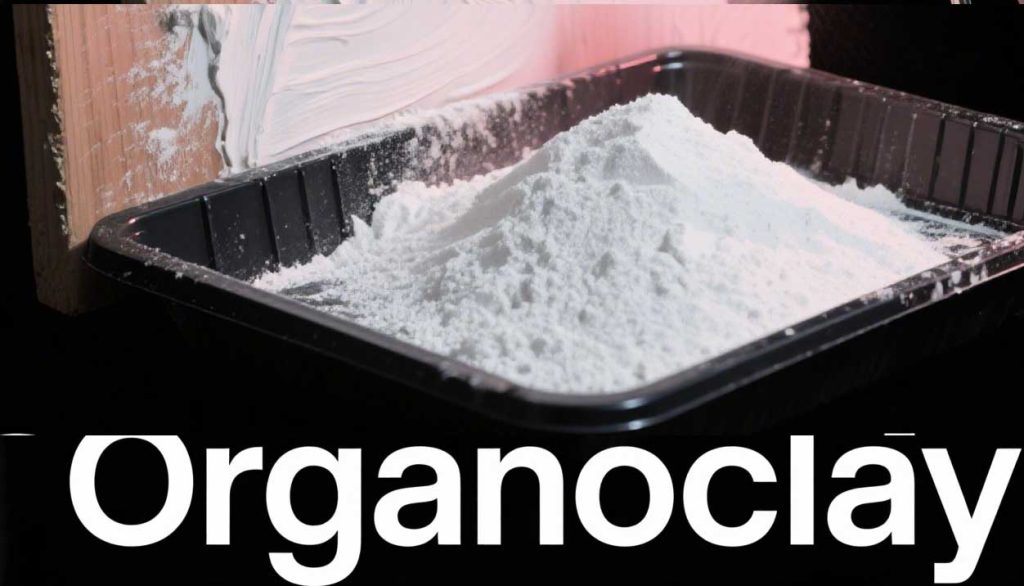
High performance efficiency in organoclay is rooted in the remarkable characteristics of montmorillonite, the key mineral in bentonite.
The unique layered structure of montmorillonite, along with its exchangeable interlayer cations, large specific surface area, and surface charge, together grant bentonite outstanding properties like water absorption expansion, dispersion suspension, cohesiveness, adsorption, and ion exchange.
These attributes contribute to the high performance efficiency of organoclay, making it widely used in numerous industrial sectors and daily scenarios: foundry, drilling mud, iron ore pelletizing, civil engineering (waterproof sealing, soil amendment), environmental protection (adsorbents, barrier materials), chemical engineering (catalysts, decolorizing agents), daily chemicals (washing aids, cosmetics), agriculture, and medicine.
Variations in bentonite types—including sodium – based, calcium – based, lithium – based, and organically modified varieties—from different regions, each with distinct properties, fit various applications, thereby boosting overall operational efficiency.
Organoclay is the commercially available organically modified clay mineral used as a rheology modifier and anti-settling additive in oil-based systems including drilling fluids, solvent-based coatings, and lubricating greases; full product specifications are at organoclay — product specifications and application guide. The organophilic clay surface chemistry, dispersion method, and compatibility with different base oils and solvents are explained in organophilic clay — surface chemistry and industrial applications. To source organoclay directly from a China manufacturer, see organoclay supplier — factory-direct supply and technical support.
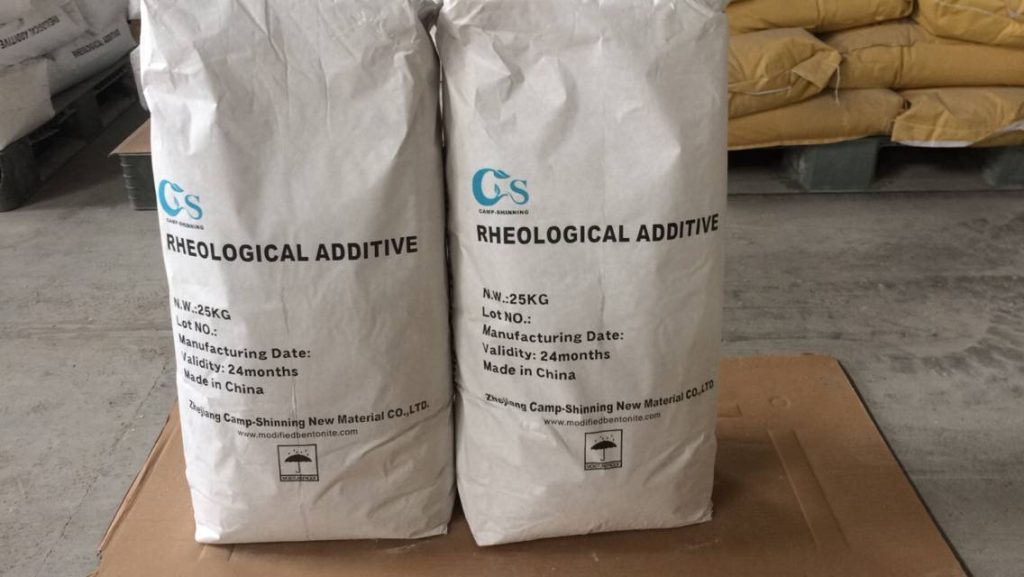
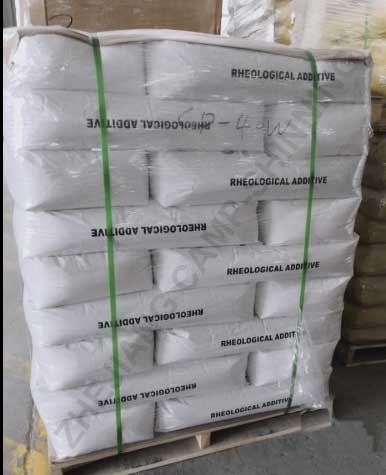
The CP series of organic bentonite is mainly used in solvent-based and water-based paints, coatings, inks, lubricants, cosmetics, and oilfield drilling fluids.
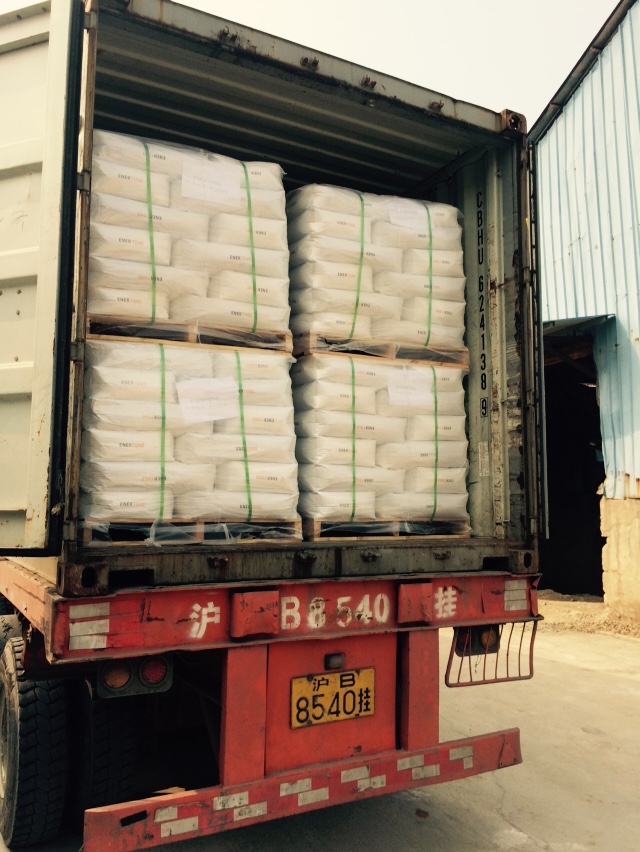
Rheology modifiers are an organo clay (modified bentonite), designed especially for use in solvent based system. Organic Clay can be used widely in solvents from low polarity to medium-high polarity.
Properties
Composition Organic derivative of a montmorillonite clay
Appearance Fine powder, light yellow
Moisture content (105℃,2hr) ≤3.5%
Loss on ignition (1000℃) 28%-31%
Bulk density 0.53g/cm3
Fineness (<74μm, %) ≥98%
Organoclay high performance efficiency
Organoclay high performance efficiency
- High gelling efficiency,high viscosity
- Wide application range, it can be applied in all low, middle and high polarity range
- Produce reproducible thixotropic consistency over a wide temperature range
- Imparts particle suspension, preventing hard settling of pigment and fillers
- Exerts strong film reinforcing action in organic binder systems
Application of Organo clay
Organo clay is used in the following applications:
- Marine paint, Industrial paint, heavy-duty, anticorrosion paint such as bituminous coatings, epoxy paints, chlorinated rubber paints
- Grease
- Inks
Sealant
Using of Organoclay high performance efficiency
Organo Bentonite disperses under high shear and requires a polar activator for best efficiency. Heat is not required to obtain good dispersion. Addition levels are typically in 0.2%~2.0%. Polar activator (95% Ethanol or 95% Methanol) is needed. Normally addition level of polar activator is recommended to be 45%~60% of CP-40 in weight. If in xylene system, addition level of polar activator is about 30%-40% of CP-40 in weight.
Pre-gel is made as below procedure.
- Charge solvent to mill
- Slowly add CP-40 (6-10% by weight of total pre-gel) to mill under agitation.
- Mix at high speed for 5 minutes.
- Add polar activator.
- Mix at high speed for 5 minutes.
Package
Kraft bag or kraft complex interior with PE or customized
Storage
Organic bentonite clay has a shelf life of 2 years, and should be stored in a ventilated, cool and dry place.
Safety
All safety information is provided in the Material Safety Data Sheets for Zhejiang Camp-Shinning New Material Co.,Ltd..
Email: [email protected]
Whatsapp : 0086-13185071071