
Organoclay filter media
Here is a real-world operating case out of Chile, handling wastewater generated during lubricant and grease production. Should your project match this set-up — a deep-bed filter tower with 1.4 m³ media volume, running at 10 m³/h, tasked with treating influent wastewater containing 256 ppm TPH by letting the stream percolate through filter media for adsorption — our Organoclay filter media CP‑200 granular organobentonite stands as the ideal fit for your application.
FAQ | Organoclay filter media
#### Q1: What is CP‑200 granular organoclay used for?
A1: Organoclay filter media CP‑200 granular organoclay is a self‑developed organophilic adsorbent for removing hydrophobic organic contaminants such as NAPLs, PAHs, PCBs, mineral oils, greases and TPH. It serves as deep bed filter media for oily industrial wastewater, groundwater remediation, landfill leachate treatment, sediment capping and solidification / stabilization applications.
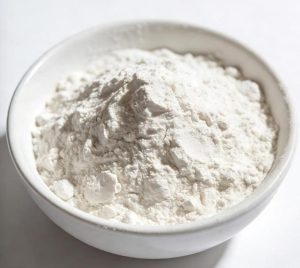
Item Specification
Bulk density 0.73‑0.83 g/ml
Loss on ignition 27%‑35%
Moisture content ≤5%
Particle size 600 μm‑1850 μm, ≥95%
Oil adsorption capacity ≥0.5 g/g
Permeability coefficient ≥0.001 cm/sec
#### Q2: What is the difference between CP‑200 and CP‑EH?
A2: Both products deliver the same wastewater treatment function; they only differ in form and dosing method. CP‑EH is a slurry, added directly into wastewater. After adsorption, the bentonite solids are separated and dewatered by a filter press. CP‑200 is granular organobentonite loaded inside a filter tower. Pollutants are adsorbed when wastewater flows through the granular packing. Customers choosing Organoclay filter media CP‑200 normally require defined particle sizes, fixed filling volume and the flow‑through filter tower process.
#### Q3: Do you have a real field reference for CP‑200?
A3: Yes. We have a genuine full‑scale case in Chile for lubricant and grease manufacturing wastewater. The influent TPH reaches 256 ppm. The deep bed filter has a media volume of 1.4 m³ and a design flow rate of 10 m³/h. CP‑200 is packed inside the tower and removes hydrocarbons as wastewater passes through the filter bed.
#### Q4: Why choose CP‑200 for deep bed filtration?
A4: Over 95% of its particles fall within 600–1850 μm. It offers stable permeability ≥ 0.001 cm/sec, sufficient oil adsorption capacity ≥ 0.5 g/g, low fine dust and good backwash performance. It can work alone or protect activated carbon upstream, reducing carbon fouling and operational cost.
#### Q5: What are the typical specifications of CP‑200?
A5: Bulk density: 0.73–0.83 g/ml; loss on ignition: 27%–35%; moisture: ≤5%; particle size: 600–1850 μm (≥95%); oil adsorption capacity: ≥0.5 g/g; permeability coefficient: ≥0.001 cm/sec.
#### Q6: How is Organoclay filter media CP‑200 packaged?
A6: It is packed in 25 kg composite kraft bags with PE liners. Custom packaging is available on request.
#### Q7: Does the guaranteed treatment result apply to all sites?
A7: Performance data comes from lab tests and the Chile lubricant & grease wastewater project. Actual results depend on local water quality, temperature, flow velocity and contaminant composition. We recommend lab and pilot tests before full deployment. Please read the MSDS before handling.
Granular organobentonite | organoclay filter media
Q8: Where can I get samples and technical support?
A8: If you are sourcing filter media for lubricant and grease wastewater with 256 ppm influent TPH under the same conditions (1.4 m³ media, 10 m³/h), please contact us for samples, process suggestions and technical support.