Organoclay MSDS (Material Safety Data Sheet) is a critical document that provides essential safety information, including details related to its modification principles.
Organoclay is produced by organically modifying hydrophilic natural bentonite, which is mainly composed of montmorillonite. The MSDS typically includes notes on the modification methods involved.
One key method is cation exchange, where inorganic cations (such as Na⁺ and Ca²⁺) in the bentonite layers are replaced with organic cations like quaternary ammonium salts, transforming the interlayer domain from hydrophilic to hydrophobic—information that may be referenced in safety guidelines within the MSDS.
Another method, intercalation, where organic molecules (e.g., cetyltrimethylammonium salts, octadecyltrimethylammonium salts) are inserted between layers to expand spacing and enhance organic adsorption, is also likely covered in safety contexts in the MSDS.
The CP series of organic bentonite is mainly used in solvent-based and water-based paints, coatings, inks, lubricants, cosmetics, and oilfield drilling fluids.
Rheology modifiers are an organo clay (modified bentonite), designed especially for use in solvent based system. Organic Clay can be used widely in solvents from low polarity to medium-high polarity.
Properties
Composition Organic derivative of a montmorillonite clay
Appearance Fine powder, light yellow
Moisture content (105℃,2hr) ≤3.5%
Loss on ignition (1000℃) 28%-31%
Bulk density 0.53g/cm3
Fineness (<74μm, %) ≥98%
Organoclay MSDS
Application of Organo clay
Organo clay is used in the following applications:
Sealant
Using
Organo Bentonite disperses under high shear and requires a polar activator for best efficiency. Heat is not required to obtain good dispersion. Addition levels are typically in 0.2%~2.0%. Polar activator (95% Ethanol or 95% Methanol) is needed. Normally addition level of polar activator is recommended to be 45%~60% of CP-40 in weight. If in xylene system, addition level of polar activator is about 30%-40% of CP-40 in weight.
Pre-gel is made as below procedure.
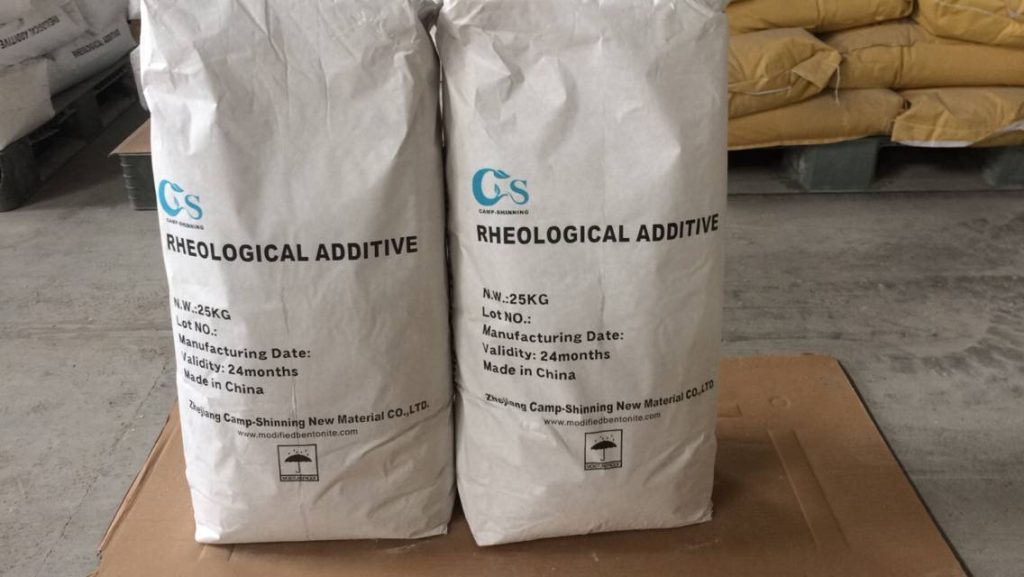
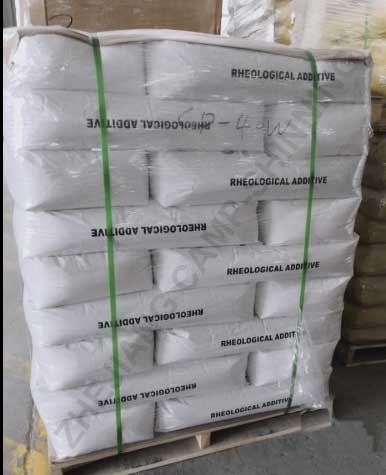
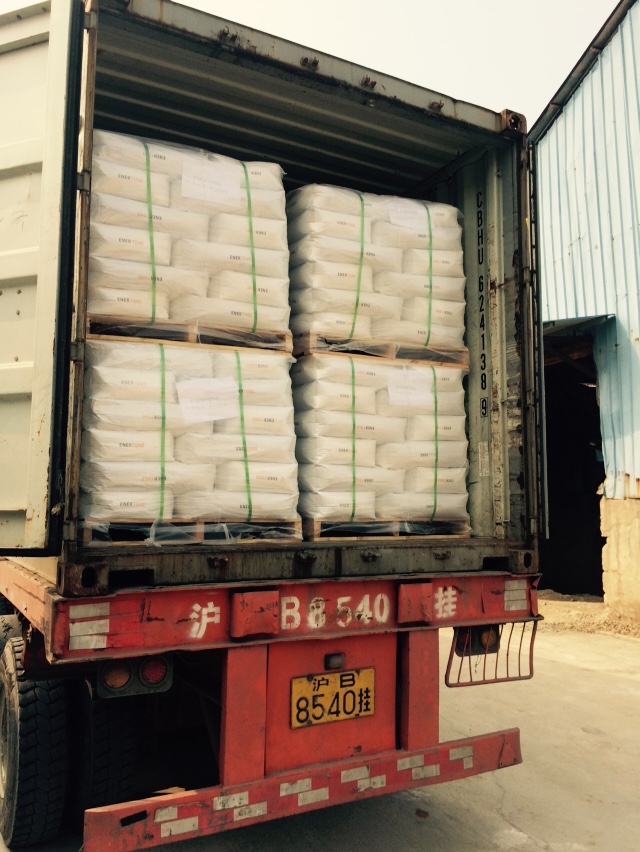
Package
Kraft bag or kraft complex interior with PE or customized
Storage
Organic bentonite clay has a shelf life of 2 years, and should be stored in a ventilated, cool and dry place.
Safety
All safety information is provided in the Material Safety Data Sheets for Zhejiang Camp-Shinning New Material Co.,Ltd..
Email: [email protected]
Whatsapp : 0086-13185071071