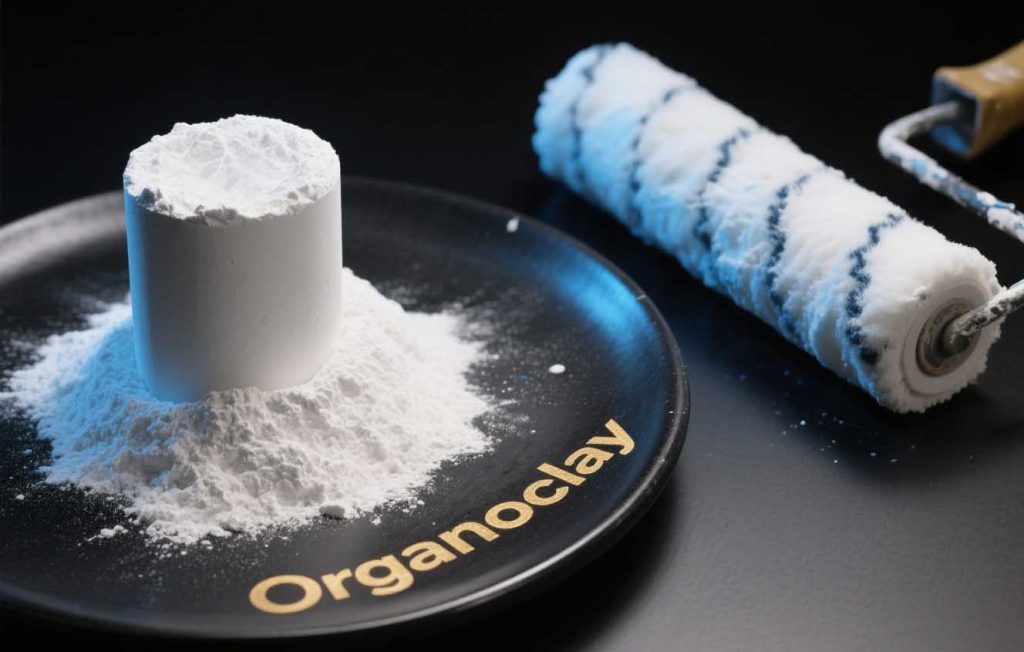
Organoclay rheological type is defined by its unique flow and deformation properties, shaped by key characteristics inherited and modified from bentonite.
One aspect is its strong binding capacity: fine organoclay particles, with a large specific surface area (up to 800 m²/g) and high surface energy, form water film bridges and van der Waals forces between particles after adsorbing water, contributing to the rheological behavior that supports cohesion in various systems.
Its high plasticity index, allowing it to be shaped into various forms when mixed with water and retain shape after drying, further defines its rheological type. Adsorption capacity, both physical (for organics, pigments) and chemical via ion exchange, influences how the rheological type interacts with different media.
Organoclay rheological type:Thermal stability also plays a role—while losing adsorbed and interlayer water at 100 – 300°C causes volume shrinkage, modified rheological types like those based on sodium – bentonite maintain better performance at high temperatures, affecting their application range.
The CP series of organic bentonite is mainly used in solvent-based and water-based paints, coatings, inks, lubricants, cosmetics, and oilfield drilling fluids.
Rheology modifiers are an organo clay (modified bentonite), designed especially for use in solvent based system. Organic Clay can be used widely in solvents from low polarity to medium-high polarity.
Properties
Composition Organic derivative of a montmorillonite clay
Appearance Fine powder, light yellow
Moisture content (105℃,2hr) ≤3.5%
Loss on ignition (1000℃) 28%-31%
Bulk density 0.53g/cm3
Fineness (<74μm, %) ≥98%
Organoclay rheological type
Application of Organo clay
Organo clay is used in the following applications:
Sealant
Using
Organo Bentonite disperses under high shear and requires a polar activator for best efficiency. Heat is not required to obtain good dispersion. Addition levels are typically in 0.2%~2.0%. Polar activator (95% Ethanol or 95% Methanol) is needed. Normally addition level of polar activator is recommended to be 45%~60% of CP-40 in weight. If in xylene system, addition level of polar activator is about 30%-40% of CP-40 in weight.
Pre-gel is made as below procedure.
Package
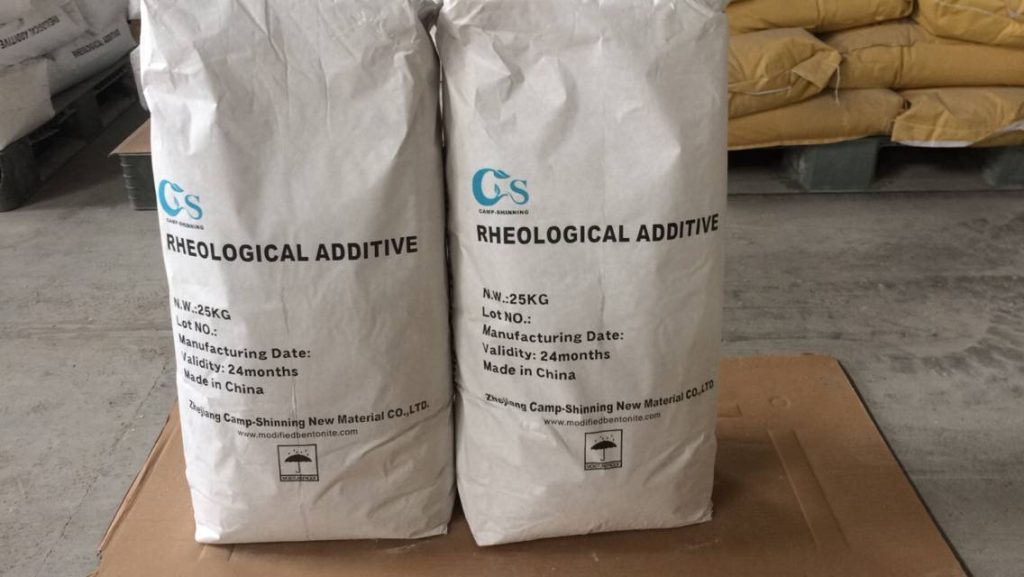
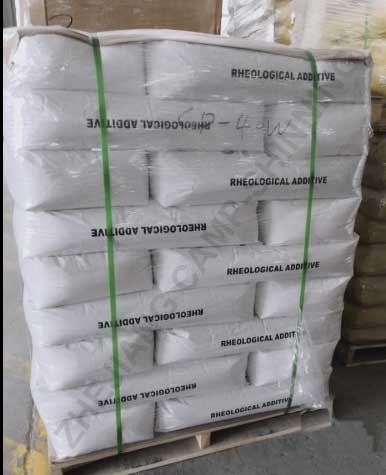
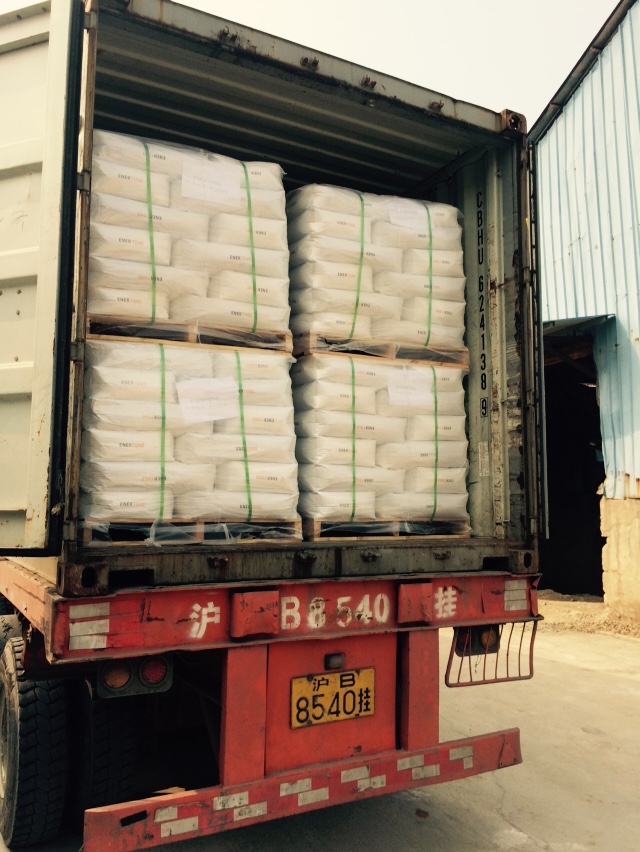
Kraft bag or kraft complex interior with PE or customized
Storage
Organic bentonite clay has a shelf life of 2 years, and should be stored in a ventilated, cool and dry place.
Safety
All safety information is provided in the Material Safety Data Sheets for Zhejiang Camp-Shinning New Material Co.,Ltd..
Email: [email protected]
Whatsapp : 0086-13185071071