When comparing organoclay vs conventional bentonite, their chemical properties highlight key differences, especially in ion exchange and surface electric.
Conventional bentonite features prominent ion exchangeability, where interlayer exchangeable cations (Na⁺, Ca²⁺, Mg²⁺, etc.) are replaceable by other solution cations, supporting its use in modification, pollutant removal, and drilling fluid control.
Its surface has permanent negative charges from isomorphous substitution (pH – independent) and variable charges at edges or functional groups, which regulate particle interactions and ion adsorption. Organoclay, however, undergoes organic modification that modifies its ion exchange profile—organic cations like quaternary ammonium salts occupy interlayer spaces.
This changes its surface charge characteristics, shifting from hydrophilic to lipophilic, resulting in distinct adsorption behaviors, particularly stronger affinity for organic pollutants compared to conventional bentonite.
The CP series of organic bentonite is mainly used in solvent-based and water-based paints, coatings, inks, lubricants, cosmetics, and oilfield drilling fluids.
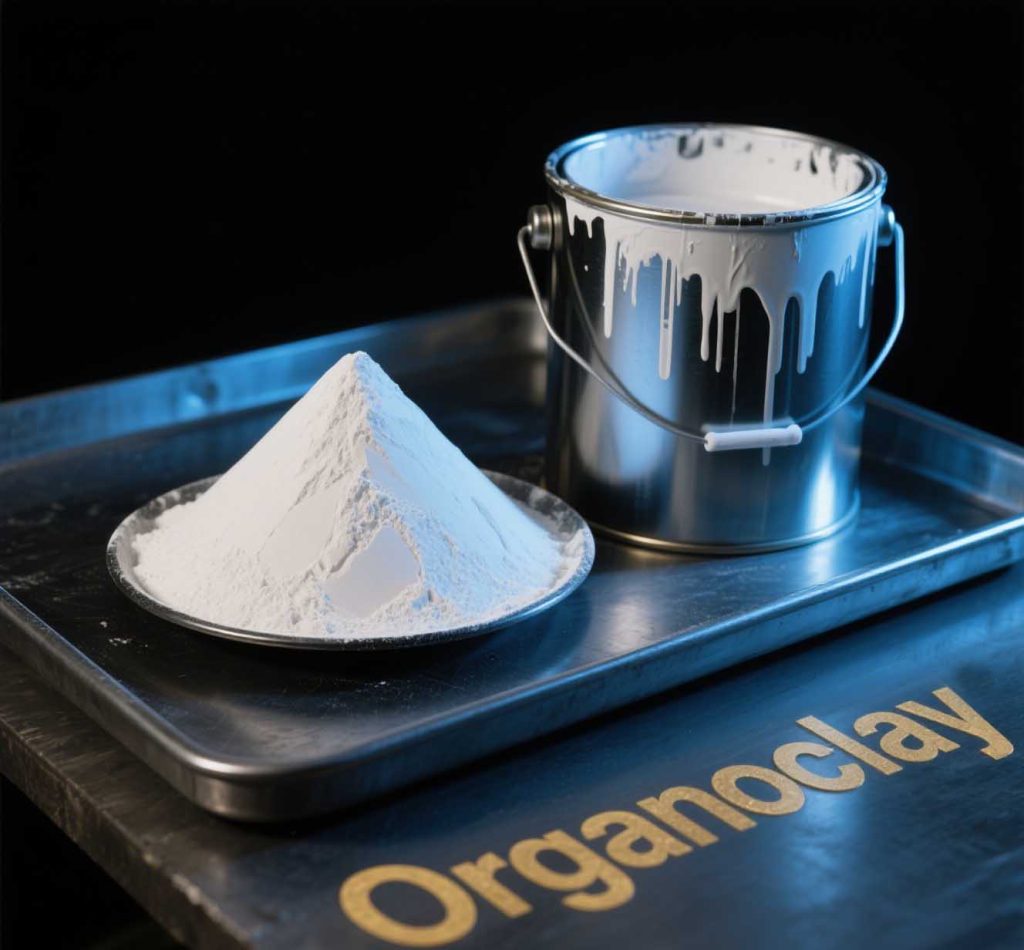
Rheology modifiers are an organo clay (modified bentonite), designed especially for use in solvent based system. Organic Clay can be used widely in solvents from low polarity to medium-high polarity.
Properties
Composition Organic derivative of a montmorillonite clay
Appearance Fine powder, light yellow
Moisture content (105℃,2hr) ≤3.5%
Loss on ignition (1000℃) 28%-31%
Bulk density 0.53g/cm3
Fineness (<74μm, %) ≥98%
Organoclay vs conventional bentonite
Application of Organo clay
Organo clay is used in the following applications:
Sealant
Using
Organo Bentonite disperses under high shear and requires a polar activator for best efficiency. Heat is not required to obtain good dispersion. Addition levels are typically in 0.2%~2.0%. Polar activator (95% Ethanol or 95% Methanol) is needed. Normally addition level of polar activator is recommended to be 45%~60% of CP-40 in weight. If in xylene system, addition level of polar activator is about 30%-40% of CP-40 in weight.
Pre-gel is made as below procedure.
Package
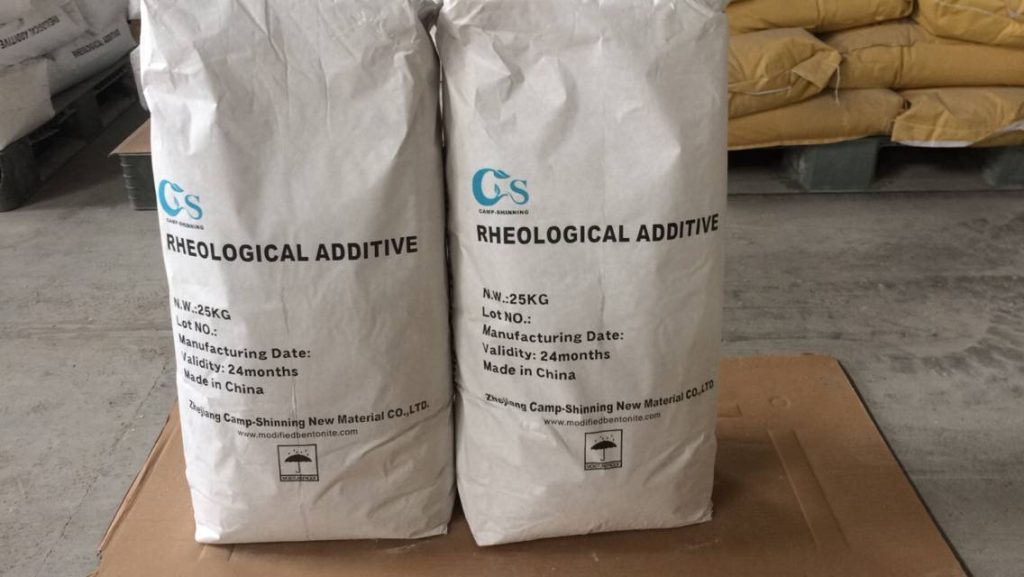
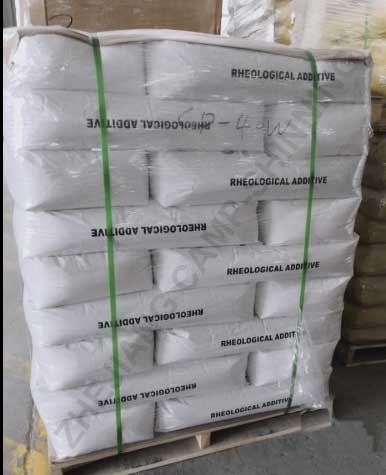
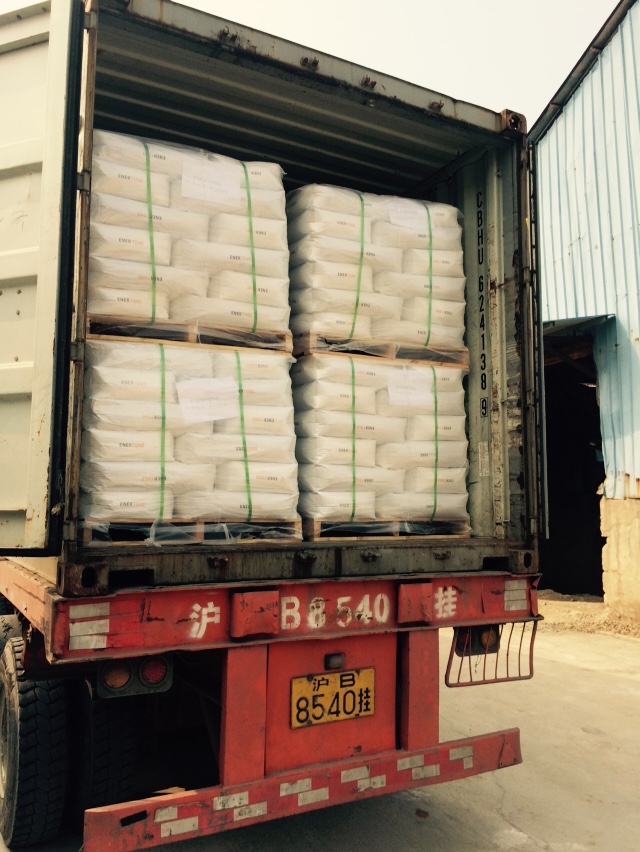
Kraft bag or kraft complex interior with PE or customized
Storage
Organic bentonite clay has a shelf life of 2 years, and should be stored in a ventilated, cool and dry place.
Safety
All safety information is provided in the Material Safety Data Sheets for Zhejiang Camp-Shinning New Material Co.,Ltd..
Email: [email protected]
Whatsapp : 0086-13185071071