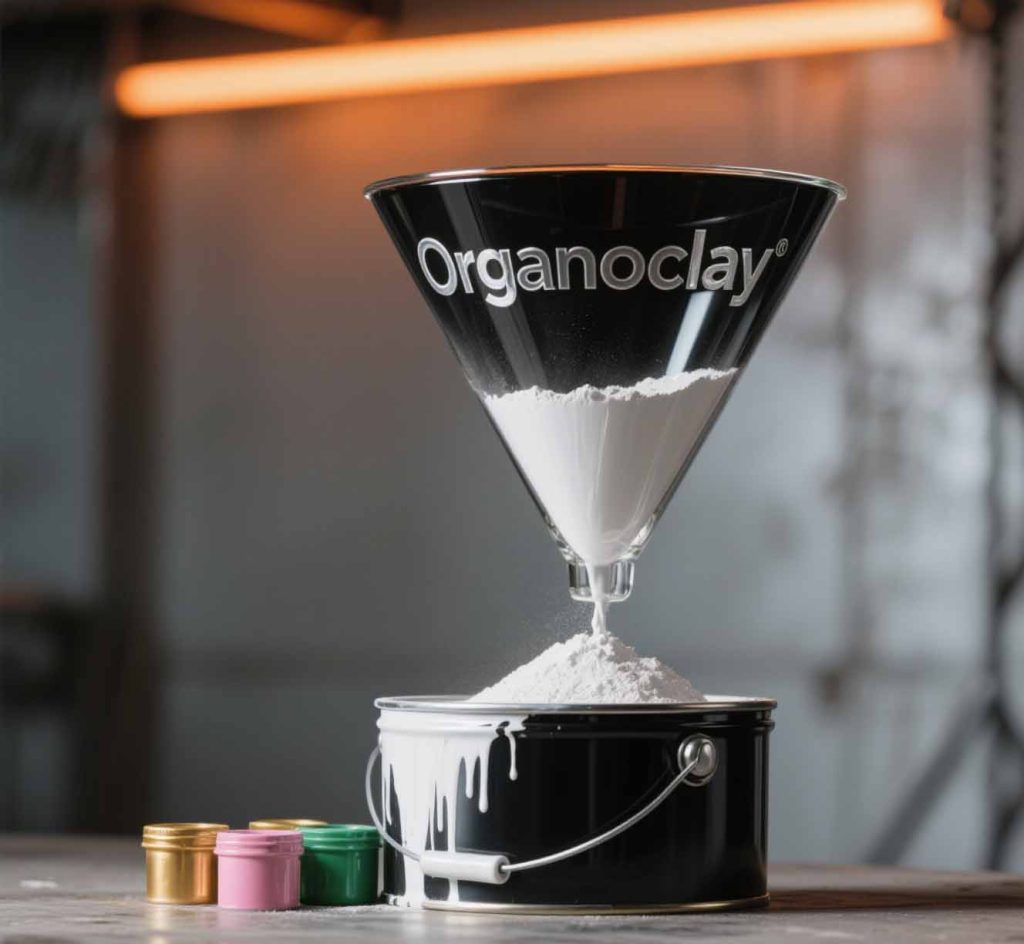
Organoclay is a modified clay material created through specific treatment processes of bentonite.
In its preparation, especially in the wet method for making organobentonite, microwave or ultrasonic assistance is often used to enhance the reaction.
The specific process involves adding bentonite powder into a surfactant solution of a certain concentration, stirring thoroughly to form a slurry, then applying microwave or ultrasonic treatment. After filtration, drying, grinding, and sieving, the final organoclay product is obtained.
Compared to dry methods and pre – gel methods—which require high – quality raw clay with high purity, are simple to operate but result in uneven products and high energy consumption—wet production of organoclay is a mature process that yields uniform products, though it is more complex. The use of auxiliary enhanced wet synthesis technologies shows promising development prospects for organoclay production.
The CP series of organic bentonite is mainly used in solvent-based and water-based paints, coatings, inks, lubricants, cosmetics, and oilfield drilling fluids.
Rheology modifiers are an organo clay (modified bentonite), designed especially for use in solvent based system. Organic Clay can be used widely in solvents from low polarity to medium-high polarity.
Properties
Composition Organic derivative of a montmorillonite clay
Appearance Fine powder, light yellow
Moisture content (105℃,2hr) ≤3.5%
Loss on ignition (1000℃) 28%-31%
Bulk density 0.53g/cm3
Fineness (<74μm, %) ≥98%
What is Organoclay?
Application of Organo clay
Organo clay is used in the following applications:
Sealant
Using
Organo Bentonite disperses under high shear and requires a polar activator for best efficiency. Heat is not required to obtain good dispersion. Addition levels are typically in 0.2%~2.0%. Polar activator (95% Ethanol or 95% Methanol) is needed. Normally addition level of polar activator is recommended to be 45%~60% of CP-40 in weight. If in xylene system, addition level of polar activator is about 30%-40% of CP-40 in weight.
Pre-gel is made as below procedure.
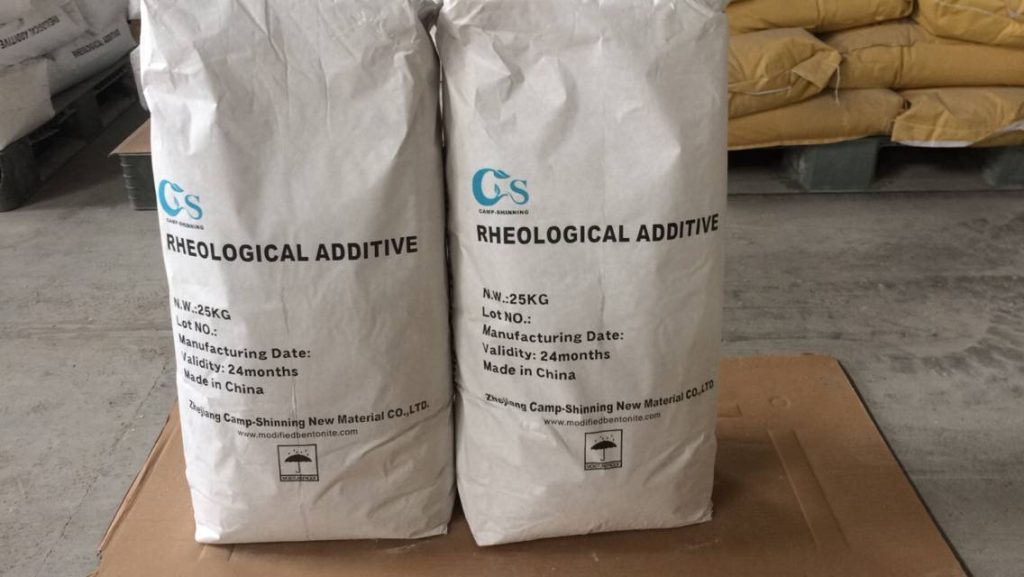
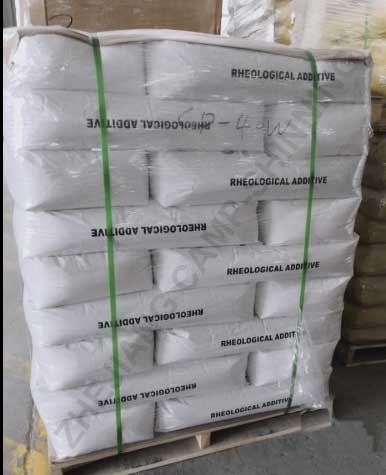
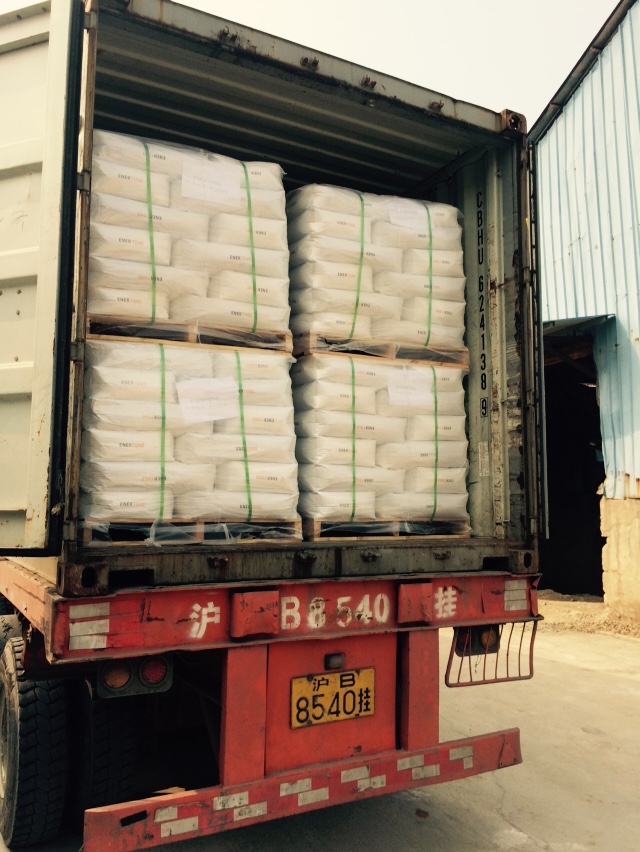
Package
Kraft bag or kraft complex interior with PE or customized
Storage
Organic bentonite clay has a shelf life of 2 years, and should be stored in a ventilated, cool and dry place.
Safety
All safety information is provided in the Material Safety Data Sheets for Zhejiang Camp-Shinning New Material Co.,Ltd..
Email: [email protected]
Whatsapp : 0086-13185071071