
organoclay — the active thickening agent in paint CP‑34 is a solid organoclay made for low‑ to medium‑polarity solvent systems. It gels well, gives you steady thixotropy, and anti-settling organoclay for marine and protective coatingsng. Works great as a thickener in paints, inks, adhesives, and more. For dosage, activator, and storage tips, check the FAQs. Explore our full range: organoclay for industrial coatings formulation, organoclay for solvent-based coatings and lacquers, and organoclay for water-based coatings.
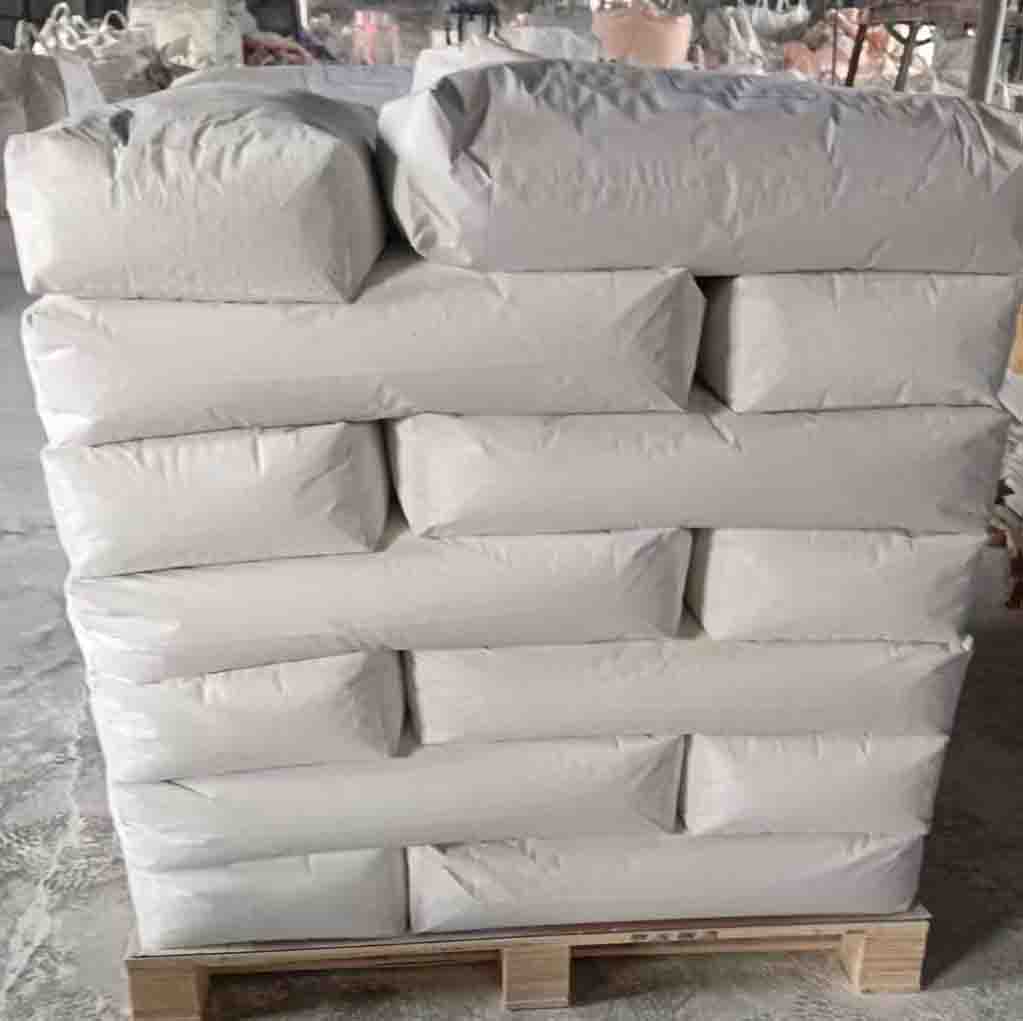
Paint thickener organoclay CP-34 | Good Rheological Additive
Organoclay for paint and coatings functions as a thixotropic rheology modifier in solvent-based, high-solid, and oil-based formulations — delivering three simultaneous performance benefits: anti-settling behavior that keeps pigments and fillers in suspension during shelf storage; anti-sagging behavior that prevents wet film from running on vertical surfaces after application; and viscosity reduction under brush, roller, or spray shear that preserves workability without additional solvent.
Treat rates of 0.2–2.0 wt% of total formulation weight cover light anti-settling work through heavy-bodied anti-sag coatings. The material disperses into the solvent phase before resin addition — with polar activator for conventional grades, or without activation for self-activating grades. A thixotropic index reading above 4.0 (measured at 6 versus 60 rpm after a 10–15 minute rest period) confirms adequate gel network formation for most industrial coating requirements. To source paint-grade organoclay with grade-matched samples and formulation data, submit your solvent system type and target thixotropic index.
Paint thickener organoclay CP‑34 is a specialty organoclay made strictly for solvent‑based formulas with low to medium polarity. It gives you organoclay in paint — thickening mechanism explainedtrol, and it performs consistently across coatings, inks, adhesives, and even cosmetics.
Core Advantages
Gels really well in low‑ to medium‑polarity organic solvents, with especially good compatibility in aromatic‑based compounds
Naturally thixotropic and anti‑settling, which helps your formulation stay stable during storage
Builds viscosity and thickens reliably over a wide temperature range
Keeps particles suspended, so pigments, fillers, and solid additives don’t settle hard at the bottom
Boosts film strength when used in organic binder systems, making the final product more durable
Incorporation Guidelines
Paint thickener organoclay CP‑34 falls into the regular organoclay category. To get its layered platelets to fully delaminate, you need two things: enough mechanical shear from good dispersion equipment, plus a polar chemical activator.
Recommended Dosage Levels
How much CP‑34 you add depends on your organic system and how much thickening or thixotropy you want. The usual range is 0.2% to 2.0% of the total formula weight. Run some lab trials to fine‑tune the amount for your specific needs.
Physical Properties of CP‑34
| Physical Properties | Specification |
|---|---|
| Appearance | Free flowing powder |
| Color/Form | Light yellow |
| Density | 1.7 g/cm³ |
| Moisture | ≤ 3.5% |
| Fineness | 95% min. passes 200 mesh |
| Loss on Ignition | ≤ 35% |
Recommended Applications
Paint thickener organoclay CP‑34 works well in these areas:
Paints: acrylic, alkyd, anti‑corrosion, baking, bituminous, chlorinated rubber, polyester, primer, road paint
Inks: mineral oil‑based, nitro‑based
Others: adhesives, putties and sealants, lubricating grease, cosmetics, wastewater treatment
Chemical Activator Guidance for CP‑34
Several polar activators work fine with CP‑34. Recommended amounts (based on the dry weight of CP‑34) are listed below:
Methanol/water blend: 30%–50%
Ethanol/water (95/5 ratio): 40%–60%
Propylene carbonate: 35%–55%
Acetone/water blend: 40%–60%
Note: Always test to find the best activator dosage. Too little or too much will hurt CP‑34’s thickening ability.
Health & Safety Notes
Before handling Paint thickener organoclay CP‑34, read its Safety Data Sheet (SDS). That’s where you’ll find all the safety, health, and environmental info.
Shelf Life & Storage
Paint thickener organoclay CP‑34 lasts at least two years from the production date. Keep it in a cool, dry indoor place for long‑term stability.
Quality Certifications
CP‑34 is made under these internationally recognized management systems:
ISO 9001 (Quality)
ISO 14001 (Environment)
ISO 45001 (Health & Safety)
Frequently Asked Questions (FAQs)
Q1: What kind of solvent polarity is CP‑34 good for?
A1: It’s designed specifically for low‑ to medium‑polarity solvent‑based systems, and it works especially well in aromatic solvents.
Q2: How do I activate CP‑34 the right way?
A2: You need high‑shear dispersion equipment plus a polar activator like methanol/water, ethanol/water, propylene carbonate, or acetone/water. Adjust the percentage based on your own lab trials.
Q3: What’s the typical usage level for modified bentonite CP‑34?
A3: Usually 0.2%–2.0% of the total formula weight. Adjust it depending on how much thickening and anti‑settling you need.
Q4: How long can I store CP‑34?
A4: At least two years from the production date if you keep it cool and dry.
Packaging: rheological additive CP‑34 comes in 25 kg paper bags with inner PE liners, and we can also do custom packaging if you need it.
You are welcome to consult our organic cooking clay. Related products: rheology modifiers for paints, thickener for paint types and selection, coating rheology modifier, anti-sag agent for high-build coatings, anti-settling agent in paint, organoclay anti-settling type. Application guides: organoclay for anti-corrosion coatings, organoclay for marine paint formulations, organoclay for automotive coatings, organoclay thixotropic properties. To purchase: get paint-grade organoclay from certified supplier.
Paint Formulation: Advanced Questions on Organoclay Performance
What are the three main performance functions of organoclay in solvent-based paint?
Organoclay addresses three distinct formulation challenges simultaneously in solvent-based coatings:
Anti-settling: Pigments, extenders, and metallic flakes sediment over time due to density differences between particles and the liquid phase. Organoclay’s gel network physically obstructs particle movement through the fluid, reducing hard-cake formation and maintaining uniform distribution throughout the product’s shelf life.
Anti-sagging: When wet paint is applied to a vertical surface, gravitational force acts on the film in the seconds to minutes before solvent evaporation or cure begins. Organoclay rapidly rebuilds gel structure after application shear stops — developing enough viscosity to hold the film against downward flow, allowing thicker builds on vertical and overhead surfaces without runs or drips.
Application viscosity control: The gel structure that prevents sagging and settling must collapse under application shear to allow smooth, even coverage. Organoclay provides this reversible behavior through the thixotropic character of its platelet network.
→ Full product overview: organoclay rheological additives
What causes a low thixotropic index after adding organoclay to a paint formulation?
Low TI after organoclay addition typically traces to one of four causes:
Insufficient mixing shear or duration: Speeds below 1,500 rpm or run times under 15 minutes leave platelet stacks partially intact, producing a weak gel despite correct dosage.
Activator miscalculation: Conventional grades need polar activator at 30–50% of organoclay weight. Below this threshold, platelet swelling is incomplete; above roughly 60%, excess activator breaks apart the gel network already formed.
Addition sequence error: Organoclay must make contact with the solvent phase first. When introduced into neat resin before any solvent is present, proper wetting is blocked regardless of subsequent mixing intensity.
Grade-polarity mismatch: Each organoclay grade is designed for a specific solvent polarity range. Deploying a low-polarity grade in a ketone or ester system prevents the solvent from entering the interlayer structure to drive exfoliation.
→ Grade selection matched to your solvent polarity: contact our coatings technical team.
What is the difference between anti-sagging and anti-settling in coatings, and how does organoclay address both?
Anti-settling is a storage challenge — organoclay’s gel network physically restricts particle movement, keeping suspension stable through the intended shelf life without requiring remix before use.
Anti-sagging is an application challenge — organoclay must rebuild its gel structure fast enough after application shear stops to prevent the film from flowing before it sets. Gel recovery in seconds to minutes after shear removal prevents runs, drips, and uneven film thickness.
Organoclay satisfies both through a physical network that responds to shear history — not shear rate alone — making it more suitable for this dual role than purely viscosity-increasing thickeners.
→ Request formulation samples and technical support for anti-sagging and anti-settling applications.
Can organoclay be used in high-solid and 100% solids coating systems?
Yes, with grade selection and process adjustments. In high-solid liquid coatings (60–80% solids by volume), self-activating grades are generally preferred — their activating compound is already incorporated at the manufacturing stage, reducing dependence on solvent volume for platelet wetting. Mixing at 40–50°C compensates partially for restricted solvent availability.
For 100% solids systems, organoclay is introduced during the melt-mixing or extrusion compounding stage, where mechanical shear and temperature together drive platelet dispersion into the polymer matrix. Dosage requires adjustment: the same weight percentage in a high-solid system represents a greater proportion of the fluid phase, often generating stronger gel effects at nominally lower concentrations.
→ Request samples and technical guidance for high-solid and 100% solids coating applications.
How is thixotropic index measured and what value indicates sufficient organoclay performance in paint?
Thixotropic index (TI) is the ratio of viscosity recorded at a low rotor speed to viscosity recorded at a higher rotor speed on a rotational viscometer. The most widely used measurement pair in industrial coatings is 6 rpm divided by 60 rpm on a Brookfield-type instrument. A TI of 4.0 or above confirms adequate organoclay gel development for most industrial solvent-based coatings. Clear and transparent systems often work with lower targets (3.0–4.0) because higher organoclay loading can scatter light and reduce gloss.
TI should be measured following a standing period of 10 to 15 minutes after high-shear mixing completes — the gel network requires this interval to reach its equilibrium state before the reading is taken.
→ View full range: rheology modifiers for solvent-based coatings · request samples with TI performance data.