What is Organoclay?
What is Organoclay?
What is Organoclay?
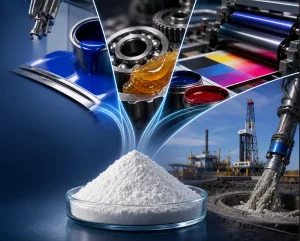
Organoclay is widely used in various industries as a kind of modified clay applied in industrial fields. This kind of organic bentonite with multi function performance is produced after the surface of natural or synthetic clay is modified by organic compounds such as quaternary ammonium salts or alkylammonium compounds .
All organic bentonites have good thixotropic properties and sincere properties. For example, It can increase thixotropic property and improve rheological properties. In general., the organic solvent system has better compatibility.
Email: [email protected] Whatsapp : +86-13185071071
What is Organoclay?
What is Organoclay ?
When many users ask what is organoclay bentonite, we must clearly answer some of its specific application fields. Below we list the different use scenarios for your reference.
For coating.However, when organobentonite is applied to paint coatings, it can effectively improve its chemical properties, such as enhancing thixotropy, improving rheological properties and anti settlement properties.It is widely used in powder paint, wood paint, marine paint and other fields.
Used for drilling fluid.In the oil and natural gas industry, the main chemical composition of drilling fluid is widely used.
It can stabilize the well bore, control the performance of rheological additives, and prevent formation damage. At the same time, it can protect the well wall and clean some of the well bottom.
Grease.If the base oil of your grease is diesel, mineral oil, vegetable oil or synthetic oil, our organic bentonite can be compatible with your grease formula. It has good high temperature and high–ressure stability, and has strong anti–ettlement performance. When you store the grease for a long time, its settling performance can be controlled.
Cosmetics.Organic bentonite is also widely used in some personal care cosmetics, such as nail polish, skin care products, etc. They help to change the texture and stability of these products, especially its thickener performance is a target performance that many cosmetics need to be used. We mainly use CP27A in cosmetics.
Of course, organic bentonite is also widely used in water based coatings and water based paints or in some water–ased systems. As long as your goal is to achieve thickening, rheological thixotropy, anti–ettlement and suspension properties, water based organic bentonite can also meet your goals of these properties in water based formulations.
What is Organoclay ?
When you mention what is organobentonite, we need to explain the specific chemical advantages of organobentonite in different application fields, that is, its performance advantages. We list the following points for your reference.
When organic clay is applied to different industrial fields, its chemical advantages are obvious, higher than those of most thickener.
What is Organoclay ?
Improve rheological properties. The paint organoclay with high surface area can make it better compatible with other materials in a formula, which can ultimately improve the rheological properties of the whole product.
When our organic bentonite is used as a thickener in the paint coating, it will realize the change of the rheological properties of the paint coating formula.The fluidity and levelness we often refer to can be collectively referred to as rheological properties in the whole formula.
What is Organoclay ?
Better compatibility. Especially in the field of oil field drilling, when conducting natural gas or oil exploration, organic clay is highly compatible with other organic solvents.
When it is added to the drilling fluid, it can increase its viscosity and improve the ability to bring drilling cuttings to the ground. As a thickener, it is also used in the production of polymers to enhance the compatibility of different materials, thus realizing the expectation of mechanical properties.
Improve suspension performance.In fact, suspension performance is the most necessary performance for oil field drilling and oil exploration, so when we add organiclay, the whole slurry will have suspension performance at night.
In general, the contribution and advantages of organobentonite to all walks of life are concrete.
From the improved rheological properties and enhanced thixotropic properties and suspension properties, it has become a multi–unctional and valuable raw material. With the continuous development of technology, organobentonite will realize and play its role in more application fields.
To learn more about organoclay product grades and their industrial applications, visit the organoclay product overview page. For sourcing, our organoclay supplier team can assist with samples, MOQ, and shipping terms. Organoclay price per metric ton is available on request.

organoclay properties
This organoclay bentonite, serving as a high-quality rheological modifier, not only functions as a thickener and viscosity controller in most formulations but also exhibits both thixotropic and suspension properties. This enables it to prevent sedimentation in chemical products during storage. Key parameters of organic bentonite directly determine its efficacy within formulations.
Amine treated bentonite CP-VZ
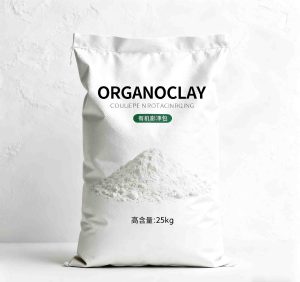
Amine treated bentonite
Amine treated bentonite:Organobentonite, used as a thickener, rheology modifier, gelling agent, and suspending agent in oil-based systems, i.e., solvent-based systems, is a modified bentonite that changes from hydrophilic to hydrophobic. This type of organobentonite modified with quaternary ammonium salts is also called an organophilic clay or rheology modifier.
What Are Organoclay?
Struggling to find the right rheology modifier for your oil-based products? Organoclay might be your solution. Organoclay are chemically modified bentonite additives used in paints, coatings, inks, grease, oilfield drilling fluids, and cosmetics (like nail polish and lotions) to improve texture and stability. They work in both oil-based and water-based systems, such as latex paints. Various Applications of Organoclay When choosing additives, knowing the right product is just half the battle. Let’s dig deeper. Why Should You Choose Organoclay Over Other Additives? Many manufacturers struggle with product inefficiency or instability—organoclay offers better control. Organoclay provide superior suspension, anti-sagging, and thixotropic properties compared to untreated bentonite or synthetic thickeners. They prevent settling in paints and improve lubricity in drilling fluids. Organoclay for Drilling Fluids Key Benefits in Different Industries Industry Key Advantages Paints & Coatings Prevents pigment settling, enhances brushability Oilfield Fluids Improves viscosity, reduces fluid loss Greases Boosts thermal stability

What are Organoclays?
Struggling to find the right rheology modifier for your oil-based products? Organoclay might be your solution. Organoclay are chemically modified bentonite additives used in paints, coatings, inks, grease, oilfield drilling fluids, and cosmetics (like nail polish and lotions) to improve texture and stability. They work in both oil-based and water-based systems, such as latex paints. Various Applications of Organoclay When choosing additives, knowing the right product is just half the battle. Let’s dig deeper. Why Should You Choose Organoclay Over Other Additives? Many manufacturers struggle with product inefficiency or instability—organoclay offers better control. Organoclay provide superior suspension, anti-sagging, and thixotropic properties compared to untreated bentonite or synthetic thickeners. They prevent settling in paints and improve lubricity in drilling fluids. Organoclay for Drilling Fluids Key Benefits in Different Industries Industry Key Advantages Paints & Coatings Prevents pigment settling, enhances brushability Oilfield Fluids Improves viscosity, reduces fluid loss Greases Boosts thermal stability
organobentonite
Organobentonite: Advanced Rheological Additive for Industrial Applications In today’s competitive industrial landscape, manufacturers are constantly seeking innovative materials that can enhance product performance while meeting stringent environmental standards.Organobentonite stands out as a remarkable solution that has revolutionized multiple industries through its exceptional rheological properties and versatile applications.This advanced material, created through the organic modification of natural bentonite clay, offers superior performance characteristics that make it indispensable in various industrial processes. Get A Free Quote Now Whether you’re looking to improve the stability of your formulations, enhance theefficiency of your production processes, or develop more environmentally friendlyproducts, understanding the capabilities and applications of organo bentonite isessential. This comprehensive guide explores everything you need to know about thisversatile material, from its fundamental properties to its wide-ranging industrialapplications and future development trends.What is Organobentonite? Organo clay is an organically modified clay mineral derived from natural bentonitethrough a process of surface modification with organic compounds. At its core,organophilic clay
CP 2 organobentonite
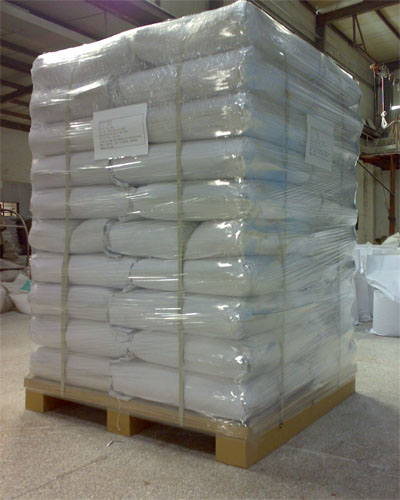
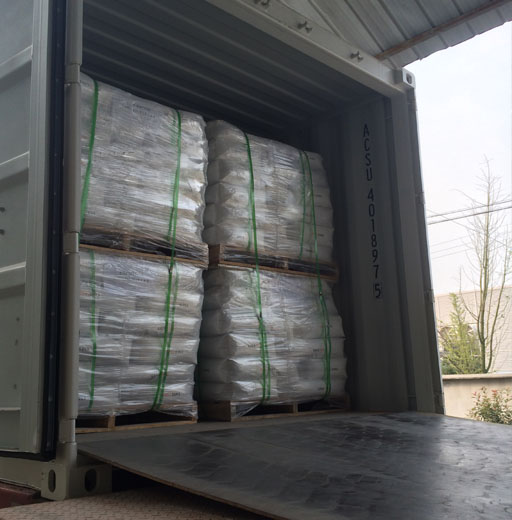
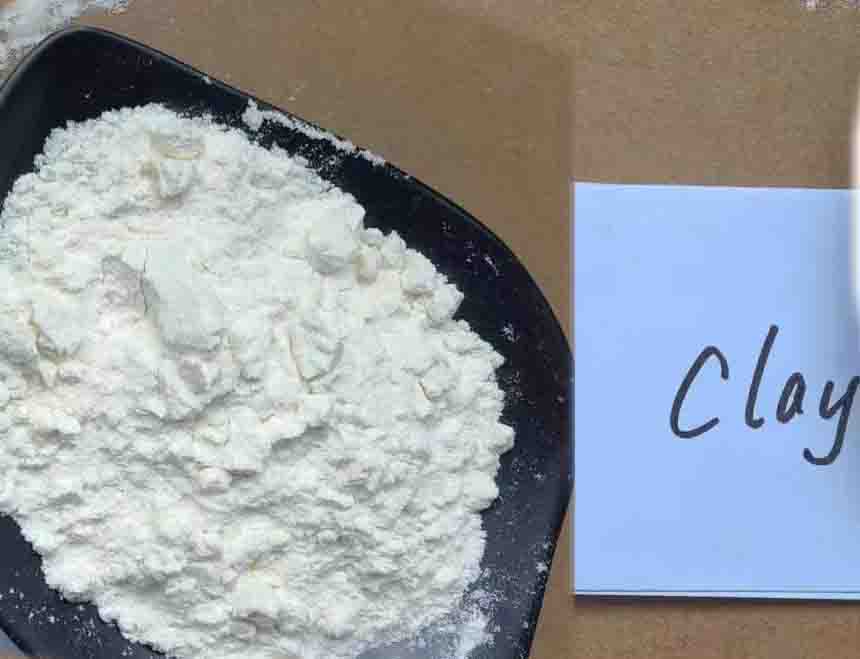
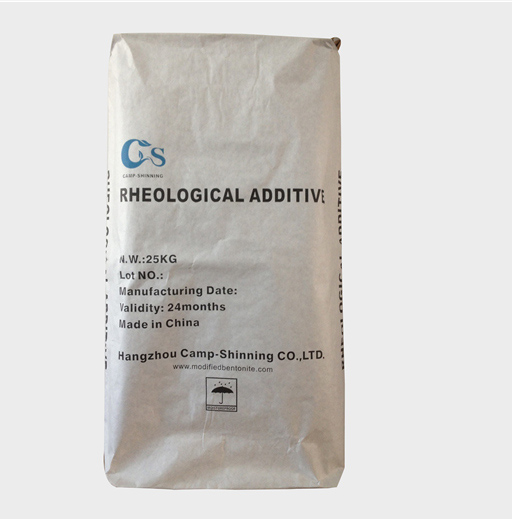
CP-2 Organobentonite for Oil drilling Mud for diesel system CP-2 Organobentonite CP-180 organoclay is an organo clay rheological additive (modified montmorillonite) designed specifically for use in solvent-based systems such as organic inks with intermediate and low polarity ranges. Get A Free Quote Now PropertiesComposition Organic derivative of a montmorillonite clayAppearance Fine powder, whiteMoisture content (105℃,2hr) ≤3.5%Loss on ignition (1000℃) 29%-32%Bulk density 0.53g/cm3Fineness (<74μm, %) ≥98%Advantages Exerts gelling efficiency over a wide range of intermediate and low polarity Easy dispersing The gel is colorless and of high clarity Produces reproducible thixotropic consistency over a wide temperature range Imparts particle suspension, sag resistance without impairing flow and leveling, preventing hard settling of pigment and fillersCP-180 is used in the following applications: grease and drilling mudThe use of CP-180 disperses under high shear and necessitates the use of a polar activator (30%-40%) for maximum efficiency. It is not necessary to use heat to achieve good dispersion. Typically, addition levels range between 0.2 and 2.0 percent. It is necessary to use a polar activator (95 percent Ethanol or 95 percent Methanol). Normally, the addition level of polar activator is recommended to be 30-40% of the weight of CP-180.SafetyThe Material Safety Data Sheets contain all safety information.PackageKraft paper bags with PE liners, multi-wall paper sacks, and customized paper sacks are available. 25kg per bag, 22.68kg per bag, or customizedStorage CP-180 has a two-year shelf life and should be kept in a ventilated, cool, and dry place.NoticeThe information on use is based on data that is thought to be reliable, but any recommendation or suggestion made is without guarantee or warranty, as the conditions of use are beyond our control. All products are sold with the understanding that purchasers will conduct their own tests to determine the suitability of such products for their intended use and that all risks will be assumed by the user. We disclaim any liability for damages caused by careless or improper handling or use. Nothing in this document should be construed as a license, inducement, or recommendation to practice any patented invention without a license. On Key Related Posts CP-180 Organoclay
What is Organoclay? What are Organoclays ?
Email: [email protected] Whatsapp : +86-13185071071
People Also Like
CP-150 ORGANOPHILIC CLAY
CP-982 Organophilic bentonite
CP-992 Organobentonite
GET A QUOTE
What is Organoclay ? I hope the above information will help you.