Bentonite clay grease:As a trusted global supplier & manufacturer from China, we specialize in providing high-quality organo clay rheology modifier for lubricants, professional metalworking products, premium grease, and core functional components for grease and metalworking applications—with a focus on top-tier organoclay thickeners and high-performance rheological components.
For grease manufacturing, our organoclay thickeners deliver exceptional stability, shear resistance, and temperature tolerance, ensuring grease maintains consistent performance in harsh environments. Complementing this, our rheological components are tailored to fine-tune the flow, viscosity, and texture of grease and metalworking fluids, meeting diverse operational needs.
Whether you need standard formulations or bespoke solutions, we are your one-stop partner for lubricants, metalworking supplies, organoclay thickeners, and grease rheological components—committed to supporting your operational efficiency and product quality.
Email: [email protected] Whatsapp : +86-13185071071
Q1: What is organoclay in grease?
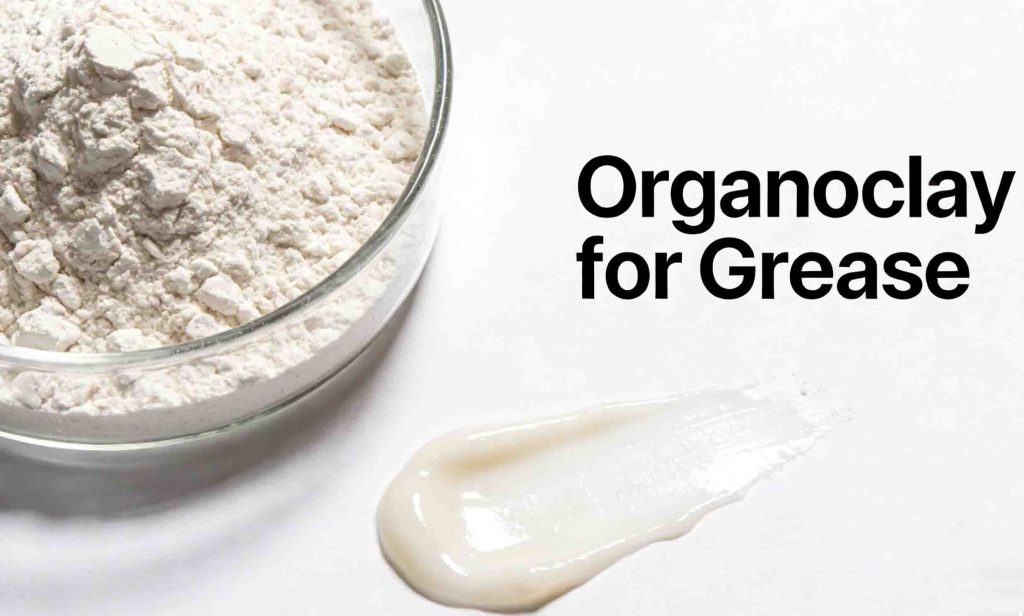
A: Organoclay, also known as organophilic clay or organobentonite, is a modified clay used as a rheology modifier and thickening agent in grease formulations. It enhances grease structure, improves stability, and delivers reliable performance across a wide range of lubrication applications.
Q2: Why use organoclay in grease?
A: As a high-performance rheological additive, organoclay helps control viscosity, improve thixotropy and suspension properties, and prevent oil separation. It enables grease to maintain stability under high temperature and heavy load conditions.
Q3: How does organoclay work in grease?
A: Organo clays interact with the base oil to form a three-dimensional gel network that traps the oil phase. This improves grease consistency, stability, and load-carrying capacity. Different base oils require selecting the right rheology agent to ensure optimal compatibility and performance.
Q4: Organoclay vs lithium grease – what’s the difference?
A: Lithium greases are soap-based, while organoclay-based greases are non-soap systems. Organoclay offers superior compatibility with synthetic oils and performs better in high-temperature and extreme conditions.
Q5: What is the recommended organoclay dosage in grease?
A: The typical dosage of organoclay ranges from 1–5% by weight, depending on the base oil type and required performance. Laboratory testing is recommended to determine the optimal dosage for your formulation.
Q6: How to disperse organoclay in grease?
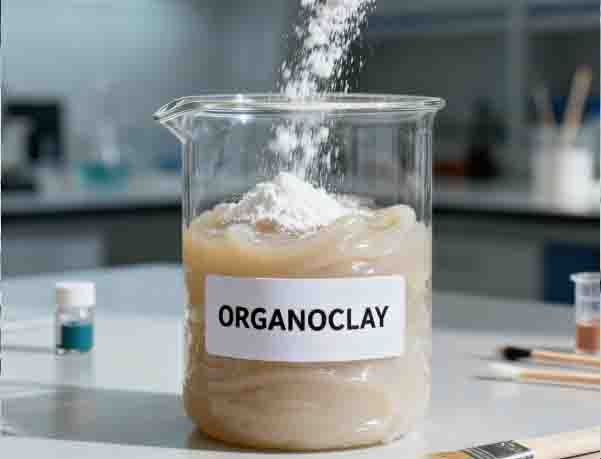
A: For best results, organophilic clay can be pre-gelled to improve dispersion. It should be activated under shear in the base oil before full mixing. Using a polar activator or high-shear mixing equipment significantly enhances dispersion efficiency.
Q7: Which base oils are compatible with organoclay?
A: Organobentonite is compatible with a wide range of base oils, including mineral oils, vegetable oils, synthetic esters, and blended systems. Its excellent compatibility makes it a versatile rheology modifier for grease formulations.
Q8: Can organoclay replace lithium or polyurea thickener?
A: Yes. In non-soap and high-temperature applications, organoclay can replace traditional thickeners, providing better stability, improved anti-separation performance, and potential cost advantages.
Q9: How to improve organoclay dispersion?
A: Use controlled shear, proper activation temperature, and suitable polar activators. Avoid excess moisture to prevent lump formation. Proper ingredient addition sequence also ensures optimal performance of the rheological additive.
Q10: How to improve grease stability using organoclay?
A: Optimize the dosage and incorporation process of the rheology agent, maintain proper mixing conditions, and select compatible base oils. With the right grade selection, both performance and cost efficiency can be significantly improved.
Q11: How to prevent oil bleeding in organoclay grease?
A: Ensure proper activation and uniform dispersion of the organoclay, and avoid incorrect dosage levels. Stable storage conditions also help minimize oil separation.
Q12: How to control viscosity and thixotropy?
A: Adjust the type and concentration of organoclay, along with particle size and activation conditions. Shear history and polar activators also influence rheological behavior.
Q13: Is organoclay suitable for high-temperature grease?
A: Yes. Organophilic clay-based greases can operate effectively at temperatures up to 200–250°C, depending on the base oil and formulation design.
Q14: Can organoclay improve extreme pressure (EP) performance?
A: When used with appropriate additives, organoclay enhances grease structure and contributes to improved load-carrying and EP performance.
Q15: Why is organoclay not dispersing properly in grease?
A: Common causes include insufficient shear, incomplete activation, excessive moisture, or incompatibility with the base oil. Proper processing is essential for full performance of the rheological additive.
Q16: What if grease becomes too soft or too hard?
A: This is usually related to incorrect organoclay dosage or base oil ratio. Overdosing increases hardness, while underdosing reduces structural strength.
Q17: How to fix grease separation issues?
A: Improve dispersion and activation of the organoclay, and consider using stabilizing additives to enhance oil retention.
Q18: Why does grease lose stability after storage?
A: Temperature fluctuations, moisture contamination, or incomplete activation of the rheology modifier can lead to structure breakdown over time.
Q19: What is the best organoclay for grease?
A: High-quality organoclays with consistent particle size and efficient activation properties provide the best results, especially for high-temperature and synthetic grease systems.
Q20: Organoclay vs Bentone – which is better?
A: Both are types of organophilic clay. The best choice depends on your formulation, base oil, and performance requirements. Pre-tested grades can simplify formulation and reduce development time.
Q21: Which organoclay works for synthetic or lithium complex grease?
A: Specialized organobentonite grades designed for synthetic oils or complex grease systems ensure optimal compatibility and thickening efficiency.
Q22: Where can I buy organoclay for grease?
A: Reliable suppliers offer bulk organoclay, along with technical support and formulation guidance. Look for ISO-certified manufacturers with export experience.
Q23: What should I look for in an organoclay grease supplier?
A: Choose a supplier that provides consistent product quality, technical support, fast sample delivery, and competitive pricing for industrial applications.
Q24: What is the price and MOQ for organoclay?
A: Pricing varies depending on grade and volume. Typical MOQ starts from 500–1000 kg. Contact suppliers directly for accurate quotations.
Q25: Can I request samples and technical support?
A: Yes. Most professional suppliers provide samples and technical assistance to help evaluate the rheology modifier in your grease formulation.
Q26: Is bulk organoclay available for US, India, and Middle East markets?
A: Yes. Global suppliers offer bulk organoclay with logistics support and export documentation for these key industrial markets.
Q27: Who is a reliable organoclay for grease supplier and how can I contact them?
A: When selecting an organoclay for grease supplier, it is important to choose a manufacturer with stable quality, strong technical expertise, and global supply capability.
A professional organoclay manufacturer should provide:
For inquiries, samples, or quotations:
📞 WhatsApp / Phone: +86-13185071071
We provide bulk organoclay, customized rheological additive solutions, and technical support for grease manufacturers worldwide.
Bentonite clay grease : The use of organo bentonite in lubricating oil is mainly to achieve its use as a thickener. The needle is organic clay bentonite, which can maintain its structure in grease, and then show new stability under high temperature and pressure.
The traditional organoclays bentonite can replace the thickener to provide good thixotropic performance for grease.
Organobentonite is a type of bentonite modified with quaternary ammonium salts as a surfactant. When using organic bentonite as a lubricant, it disperses and adheres together, which constructs the structure of the lubricant and provides many chemical performance advantages.
So let’s give specific examples of the performance advantages that organic bentonite clay can exert when used in lubricating greases. Now let’s give examples one by one.
1),Stability of bentonite clay grease:
Firstly, bentonite clay grease achieves temperature stability because most traditional thickeners of organic bentonite have better thermal stability. It can achieve stable performance at a maximum temperature of 350 ℃.
Therefore, bentonite clay grease can be used as a high-temperature lubricating grease, which means that organic bentonite can maintain the stability of the oil structure at high temperatures.Simultaneously thickened with good performance.
Bentonite clay grease : Organic bentonite clay is a lubricating grease additives. It is widely used in lubricating grease as a grease thickeners.Whatever it is grease organic or inorganic, We all have corresponding organic clay bentonite models to match your system. Another goal is to improve thixotropic grease.
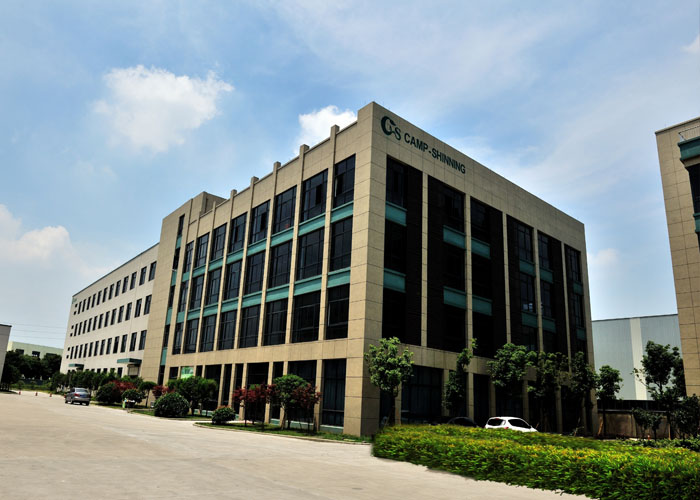
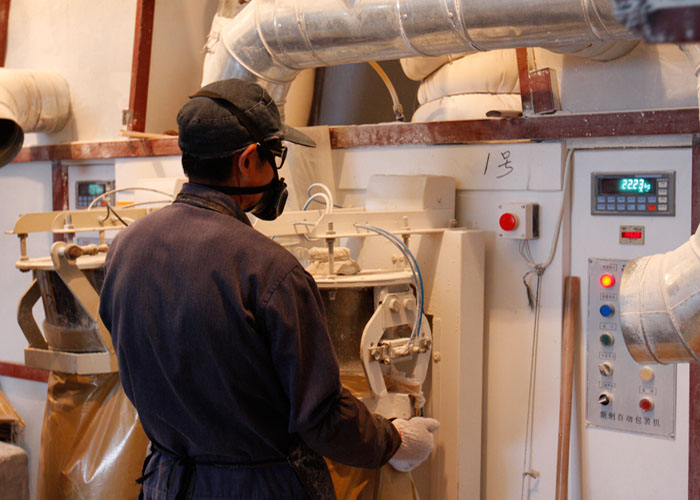
Grease additive suppliers Zhejiang Camp Shinning New Material Co.Ltd. With 20 years of production and research and development experience, we are worthy of your trust.
2, Anti settlement.
The bentonite clay grease has a good gel like consistency, which is mainly derived from the organic bentonite plate structure, so as to prevent the achievements of additives, especially the pigments, from resisting his achievements.
The additives remain evenly dispersed throughout the grease, so that its performance improves over time.
3,Extend service life.
Due to its advantages such as temperature stability, water resistance, anti settling performance, and reduce oil leakage.So organic bentonite greases usually have a longer service life than other thickeners thickened greases, and they retain their complete performance during transportation time and challenging conditions.
4,Water resistance.That is hydrophobicity.
There are basic surfactants that enhance the hydrophobicity of lubricating grease during use, providing excellent waterproof performance for the grease.And erosion resistance.
This can protect the equipment from damage and rusting.Even when exposed to heavy water, it can maintain its water resistance and hydrophobicity.
5, Oil resistance of bentonite clay grease.
Organic bentonite can effectively immobilize oil molecules in the substructures. This greatly reduces the possibility of oil leakage in the grease, reducing the surface contact of more squid lubricating oil and preventing the viscosity of the lubricating oil from changing over time.
Bentonite clay grease
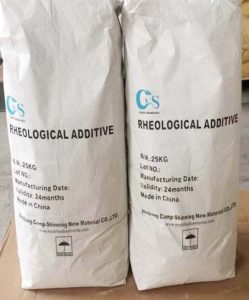
Kraft paper bag with PE liner or multi-wall paper sacks or customized. 25kg/bag or 22.68kg/bag or customized
Bentonite clay grease
Organophilic clay is an organo clay (modified montmorillonite), designed especially for use in solvent based system including intermediate and low polarity range organic Inks.
We recommend that you test the sample to get the final result you need. The most important thing is that we hope to verify whether it matches your formula through the test.Bentonite clay grease.
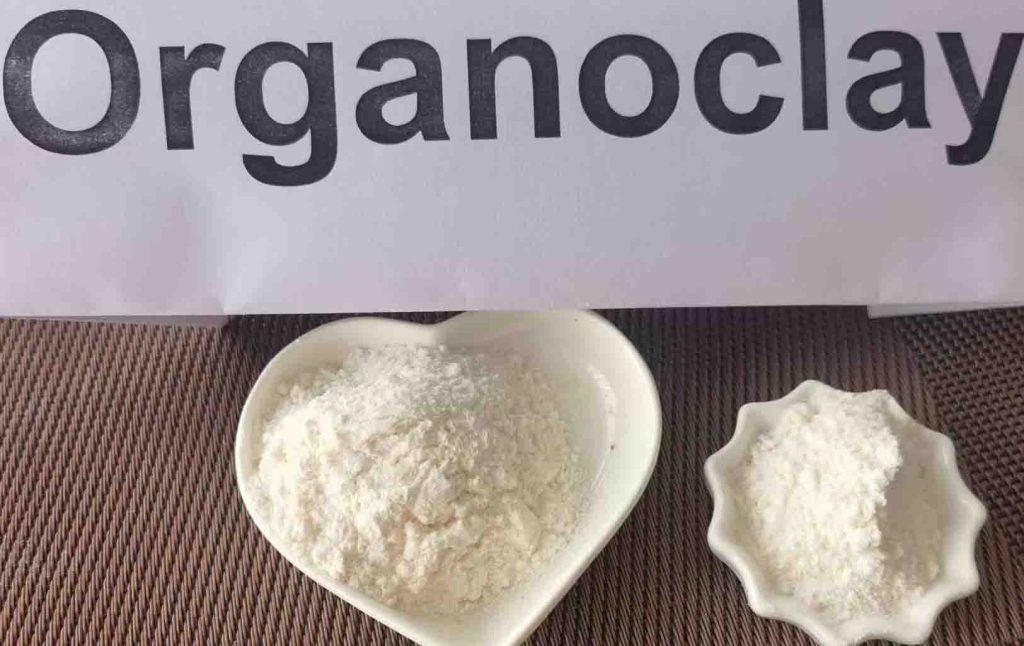
Composition Organic derivative of a montmorillonite clay
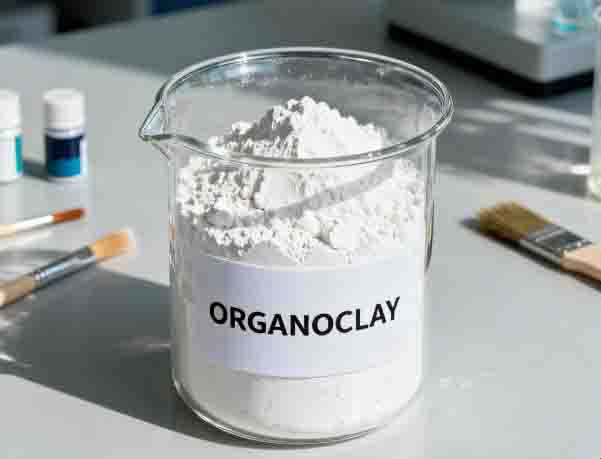
Appearance Fine powder, white
Moisture content (105℃,2hr) ≤3.5%
Loss on ignition (1000℃) 29%-32%
Bulk density 0.53g/cm3
Fineness (<74μm, %) ≥98%
Get in touch with Camp Shinning today to have your most cooperative organoclay supplier & manufacturer in China.bentonite clay grease.