Organoclay for lubricating grease functions as an inorganic clay thickener — creating an interconnected platelet structure that retains base oil within the thickener framework at working consistency. The defining advantage over soap-based thickeners is the absence of a measurable drop point: soap thickeners melt when heated above their characteristic softening temperature, releasing oil and causing lubrication failure. Organoclay mineral platelets are inorganic — they do not soften at any practical application temperature, maintaining structural integrity through continuous service beyond 200°C and reaching decomposition only above 600°C.
This thermal resilience positions organoclay as the standard thickener for kiln-mounted bearings, continuous furnace chain conveyors, open-gear systems, and other high-heat equipment where soap-based greases repeatedly fail at temperature. Organoclay greases also offer strong water washout resistance, minimal oil separation during storage, and compatibility across synthetic and mineral base oils. Typical organoclay content in finished grease ranges from 7% to 10% by weight of the complete formulation, with colloid mill passes needed to achieve complete platelet separation and consistent NLGI structure. To source grease-grade organoclay with recommendations matched to your base oil and service temperature, request a technical quotation.
Anti-settling performance of organoclay-based greases for industrial lubrication is a core indicator of grease storage stability, and the three-dimensional gel network formed by organoclay — base material for non-melt grease thickening — provides reliable assurance for this.
This network structure is formed by connecting bentonite layers with organic chains, with pore sizes as small as 0.1–1 μm, effectively trapping base oil molecules and functional additives.
In a 40°C constant-temperature storage test, lubricating grease containing organic bentonite exhibited a base oil separation rate of only 0.3% after three months of storage, significantly lower than the industry average of 3% for traditional lubricating grease.
For greases containing solid additives, such as extreme-pressure greases with molybdenum disulfide, the anti-settling effect is even more pronounced.
Microscopic observation shows that molybdenum disulfide particles are uniformly distributed with no obvious agglomeration. This performance significantly extends the shelf life of the grease, ensuring stable performance for up to two years after production. Key technical resources: grease additives organoclay for NLGI grade control, organoclay for grease formulations: dosage and activation, organoclay in industrial grease production process. Performance guides: organoclay-based lubricants for heavy machinery, lubricating grease additives selection guide, organoclay greases for high-speed bearing lubrication, organoclay greases for high-pressure applications. Advanced products: self-activating organoclay grease gellant, rheological additives for lubricant grease, high-yield organo clay additives, organoclay high-temperature stability. Extended applications: organoclay for industrial sealant formulations, organoclay-based adhesives for structural bonding. Contact our organoclay supplier for grease and lubricant industry.
Unlike soap-based greases, organoclay-thickened greases do not produce a measurable reading on standard drop point tests (ASTM D566 / ASTM D2265). The thickener consists of inorganic mineral platelets — the clay crystal lattice begins to break down only above 600°C, a temperature no practical lubrication application reaches. By contrast, lithium soap thickeners soften at approximately 190°C, lithium complex grades at around 260°C, and polyurea systems at roughly 265°C.
Equipment with sustained heat exposure above 180°C — glass plant rollers, oven chain systems, kiln trunnion bearings — requires a thickener that cannot melt, which is the technical justification for clay grease as a product category.
→ Full organoclay product range · contact our grease technical team
Organoclay thickening is compatible with consistency grades from NLGI 000 (semi-fluid) through NLGI 3 (firm), with NLGI 1 and 2 representing the most common specifications for clay grease in practice. NLGI 2 suits most bearing applications. NLGI 1 is used in centralized lubrication systems and open-gear applications. Consistency is verified using ASTM D217 cone penetration testing after 60 strokes at 25°C.
→ Request grade recommendations for your target NLGI specification and base oil type.
Organoclay greases demonstrate strong resistance to water washout, rooted in the hydrophobic nature of the thickener matrix. The quaternary ammonium surface modification creates platelet surfaces that repel water — when the grease contacts spray, condensation, or immersion, the thickener framework remains largely intact instead of softening or emulsifying.
Under ASTM D1264 — directed water spray at 79°C for one hour — properly formulated clay greases typically retain more than 95% of their weight after exposure. This qualifies organoclay grease for marine equipment, food processing conveyors with washdown cycles, outdoor construction machinery, and paper mill applications with persistent moisture.
→ View grease-grade organoclay grades for high-temperature and wet-environment service.
Organoclay content in finished lubricating grease typically falls between 7% and 10% of total formulation weight — substantially higher than treat rates used in coatings or drilling fluids, because grease requires enough thickener to achieve NLGI 1–3 solid-but-workable consistency.
Within this range, the specific loading depends on target NLGI grade, base oil viscosity, and dispersion process efficiency. Polar activator is supplied at roughly one-third to four-tenths of the clay weight. For new formulation development, starting at 8 wt% organoclay with activator at 30% of clay weight, processing through a colloid mill, then adjusting based on penetration measurement, provides a reliable development starting point.
→ Contact our grease formulation team for grade-specific loading guidance and reference formulations.
Colloid milling is the processing step that determines whether organoclay thickener develops its full potential. Batch mixing — even with high-shear dispersers — achieves only partial platelet separation. The colloid mill applies narrow rotor-stator gap shear that systematically breaks apart platelet stacks into individual exfoliated units.
The practical requirement is two to three passes through the mill after initial mixing and activator addition. Omitting the colloid mill step typically produces a soft and inconsistent product — not because the organoclay grade is defective, but because incomplete platelet separation leaves most of the thickening capacity unrealized within unexfoliated stacks.
→ For manufacturing process guidance: contact our grease technical team with your production equipment details.
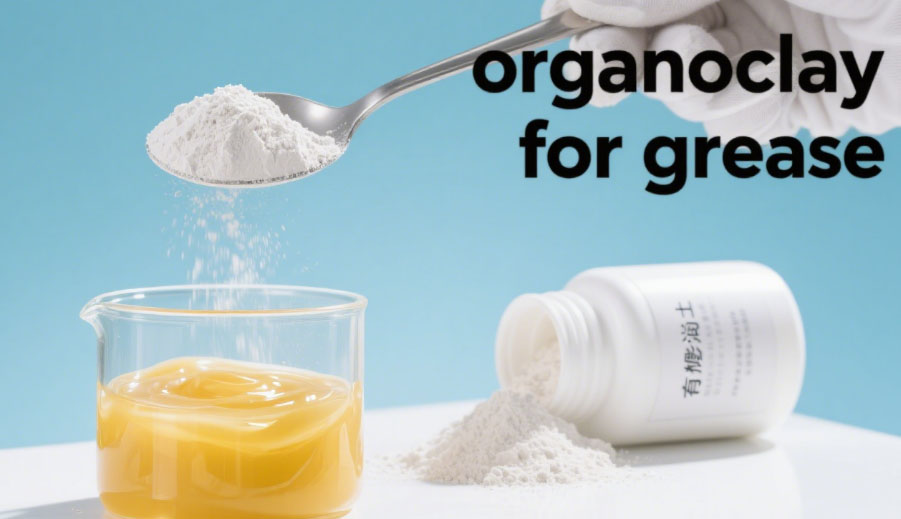
Organoclay for Grease
Organophilic clay CP-720A is a kind of purified and modified organoclay rheological additive, designed especially for using in Grease based on synthetic oils such as vegetable oil, polyester oil. Organic clay has high gelling efficiency, fine thixotropy and perfect anti-settling.
Organiclay bentonite CP-720A is used in the following applications:
Advantages of Organoclay Rheological Additive
Properties of Organoclay
Composition Organic derivative of a montmorillonite clay
Appearance Fine powder, light yellow
Moisture content (105℃,2hr) ≤3.5%
Loss on ignition (1000℃) 34%-36%
Bulk density 0.42g/cm3
Fineness (<74μm, %) ≥98%
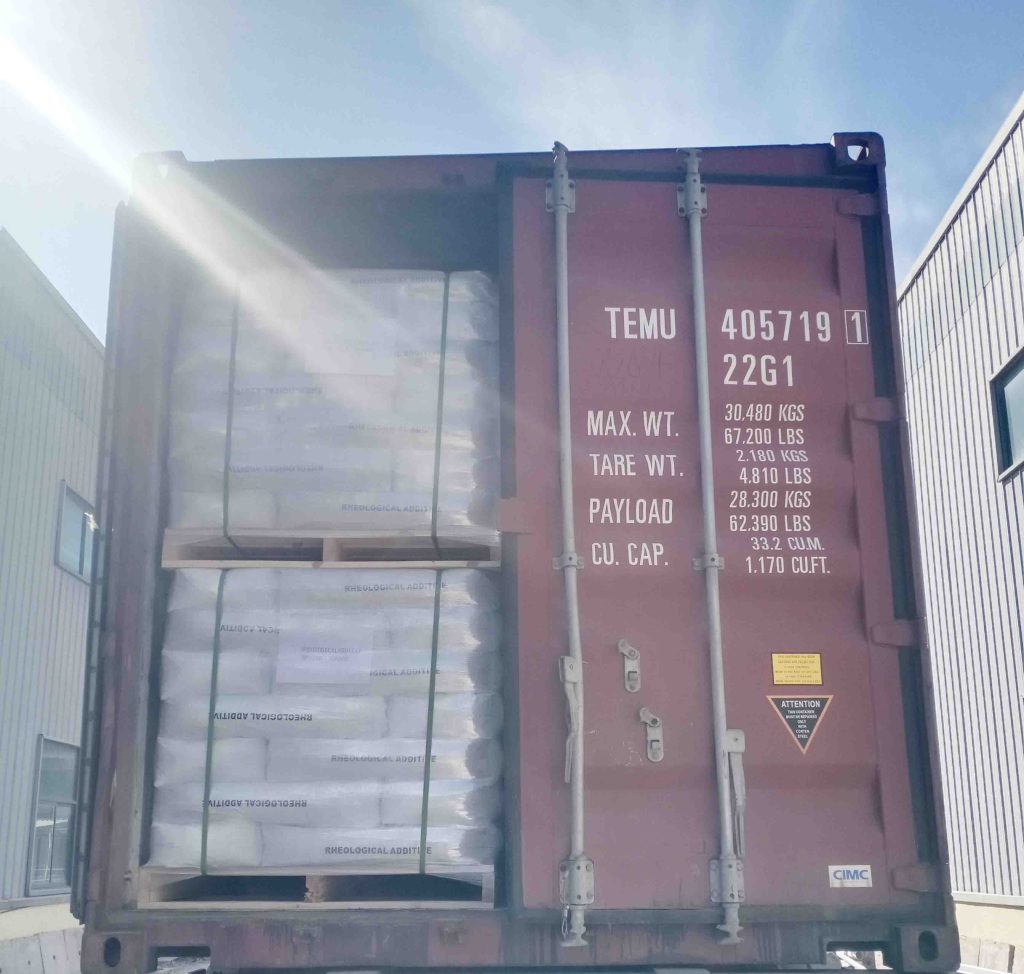
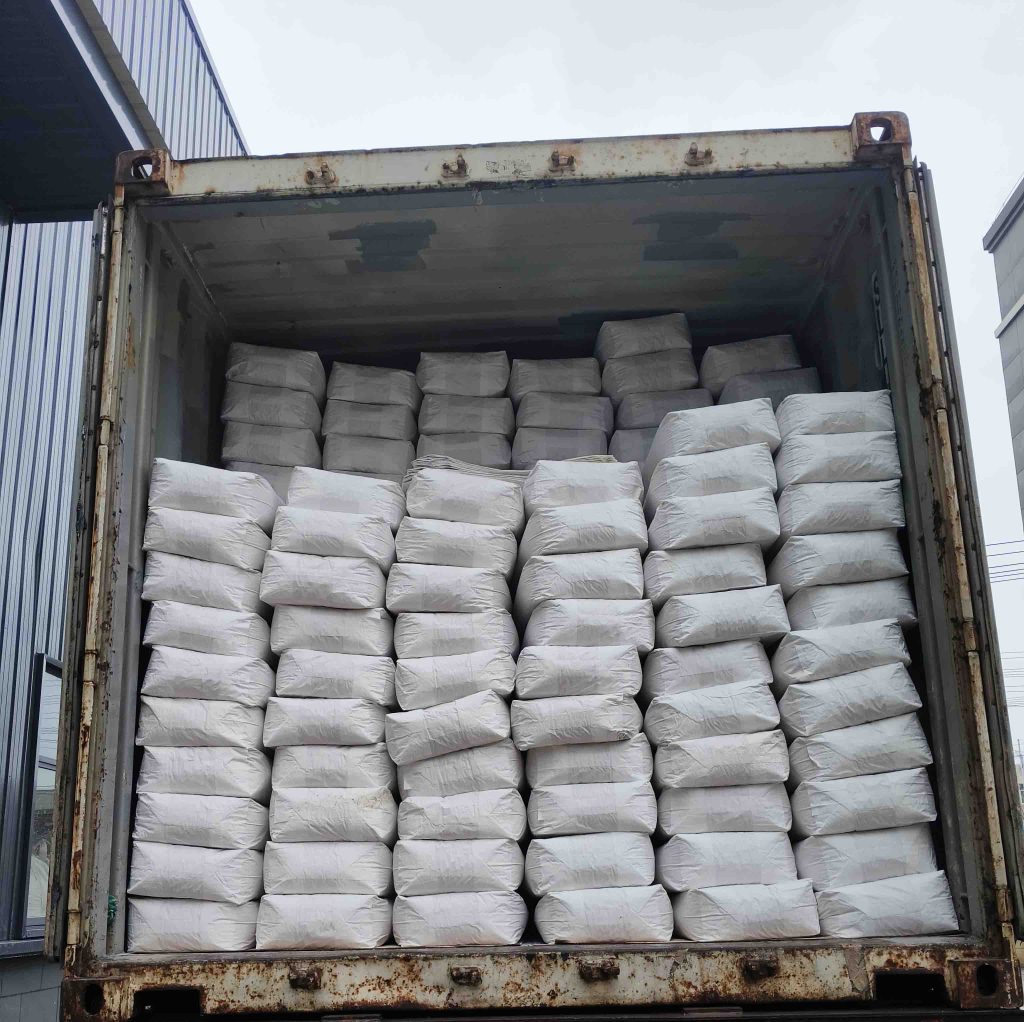
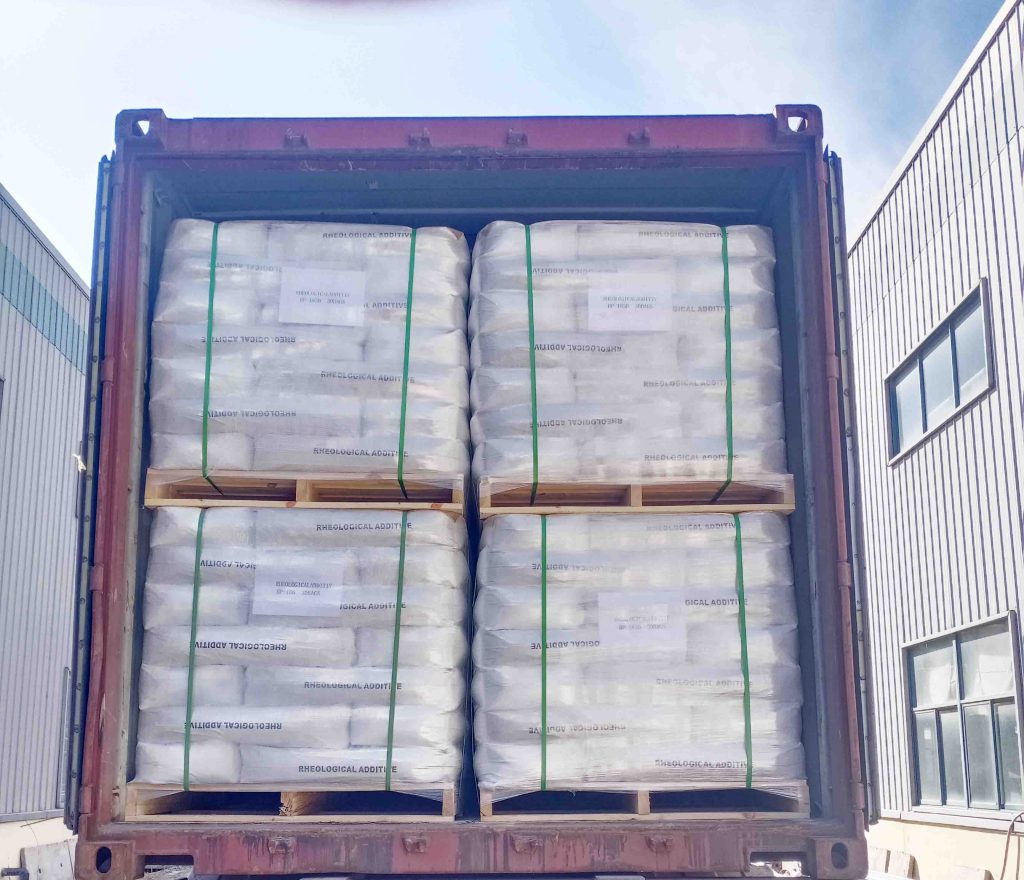
Organobentonite Packages
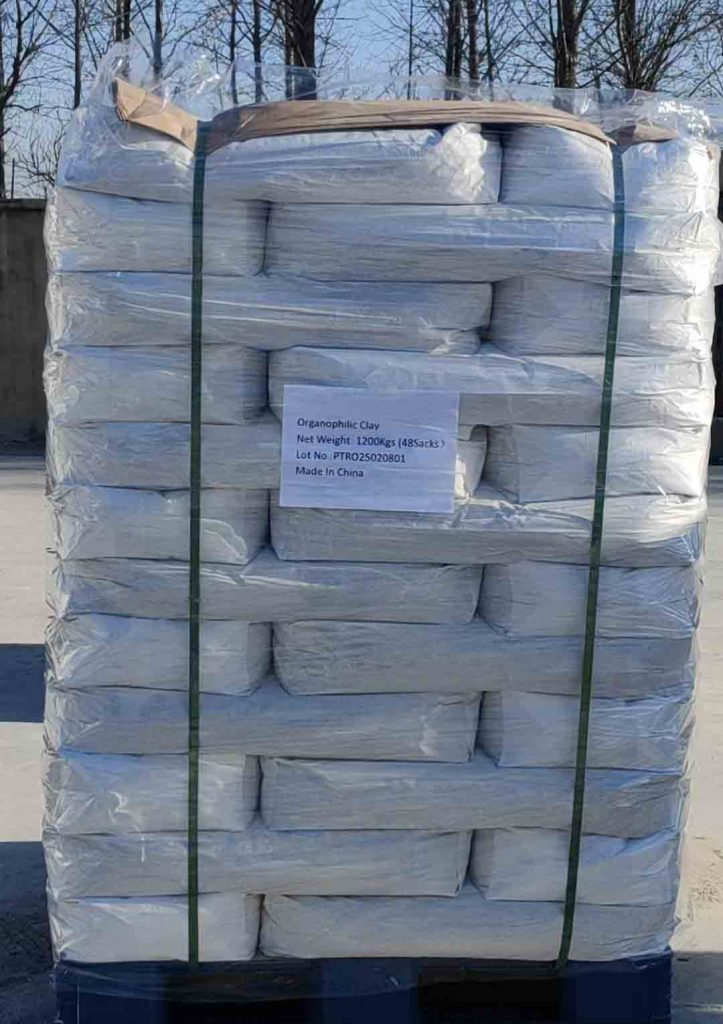
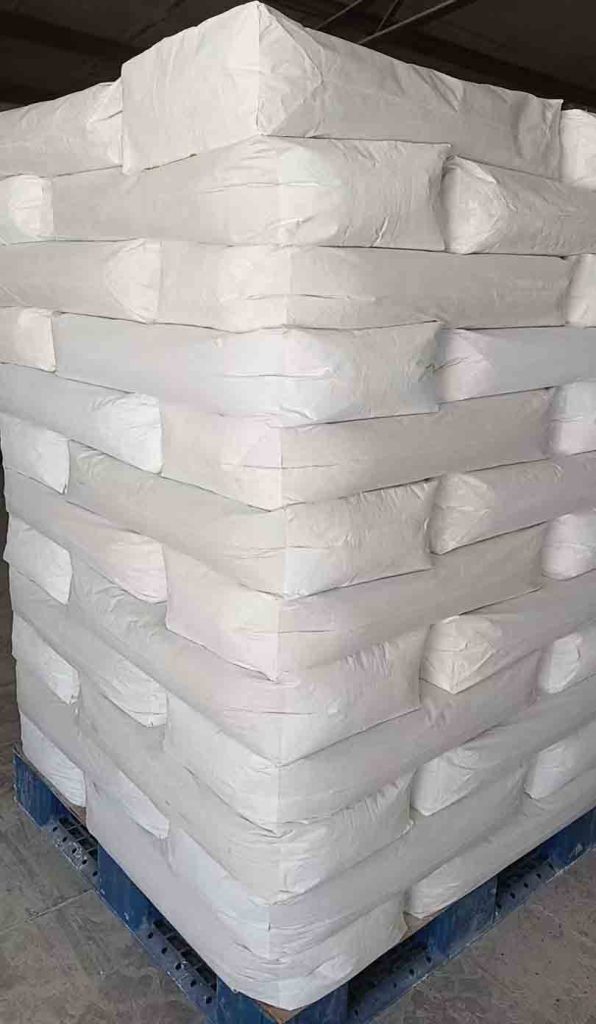
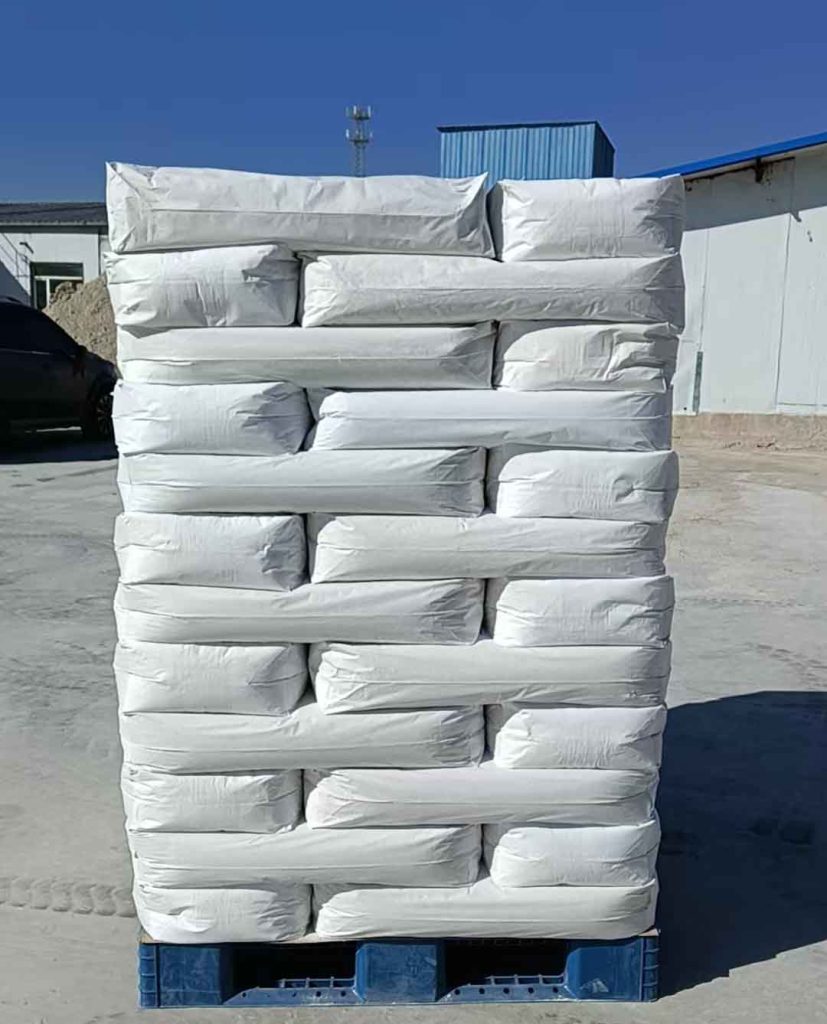
Kraft paper bag with PE liner or multi-wall paper sacks or customized. 25kg/bag or 22.68kg/bag or customized.
Organophilic clay Store in a dry, well-ventilated area with temperature of 0℃-30℃. Keep container closed. The quality guarantee period is 24 months.
When it is used in Grease Lubricant, polar activator is needed. Polar activator is acetone/water(95/5). The dosage of activator is 20%-30% of the weight of CP-720A. And also high shear can promote the dispersing of rheology modifier CP-720A.
Adding procedure as follows:
Note: With High-speed dispersant of grinding machine, and properly prolong the dispersing time, better gelatin performance can be reached.
The Lubricanting grease which uses organoclay as thickener will own high dropping point, thus can be used under high temperature and presents good impermeability and water resistance.


微信
+86-13185071071
扫码添加微信 · Scan to add WeChat