
Rheology Modifiers Organophilic clay
We are mainly engaged in the research, development, production, and sales of fine chemical products related to rheology modifier including organoclay for non-polar systems, and provide technical support and supporting services for the products. Learn the basics: what is a rheology modifier — definition and function and how does a rheology modifier work in shear-thinning systems.
Rheology Modifiers | Organoclay
Rheology Modifiers | Organo clay Rheological additive
A rheology modifier is a specialty processing additive that governs how a liquid or semi-solid product moves, deforms, and resists flow under varying mechanical conditions — without becoming part of the product’s chemical structure. Its practical function is to solve three concurrent formulation challenges: keeping solid ingredients from sedimenting during storage (high viscosity at rest); enabling easy pumping, spraying, or brush application when mechanical shear is applied (viscosity reduction under movement); and preventing the applied film or compound from running or drooping before it cures or dries (rapid viscosity recovery after shear stops).
Industrial formulation uses different rheology modifier families depending on whether the system is non-aqueous or water-based. Solvent-based coatings, oil-based drilling fluids, and lubricating greases rely primarily on organoclay — the dominant clay-based modifier for non-aqueous rheology control. Waterborne formulations use polymer thickeners (HEUR, HASE) or cellulose derivatives (HEC, HPMC) that function only in water-continuous media. These two families operate through fundamentally different activation mechanisms and are not substitutable across the water/solvent divide. To source organoclay rheology modifiers for solvent-based and oil-based applications, request technical data and grade recommendations matched to your formulation system.
We use bentonite as the basis to produce rheology modifiers for paints — selection by system polarity, thickening rheological agents for BENTONITE lubricating grease for drilling fluid rheology modifiers for oil-based mud, and organoclay for lubricating grease, which are both problematic.
We use high-quality bentonite resources as raw materials, use advanced technology, sophisticated equipment, and perfect production processes, and have accumulated a lot of experience in the research, development, production, and sales of various high-end organic bentonite. Especially in the application field, we have accumulated a lot of practical experience, especially in the fields of coatings, lubricants, petroleum drilling, cosmetics, adhesives, and other applications.’
Waterborne organic bentonite, thickening rheological agent, also known as inorganic gel, is an improved thickening rheological agent of natural bentonite.
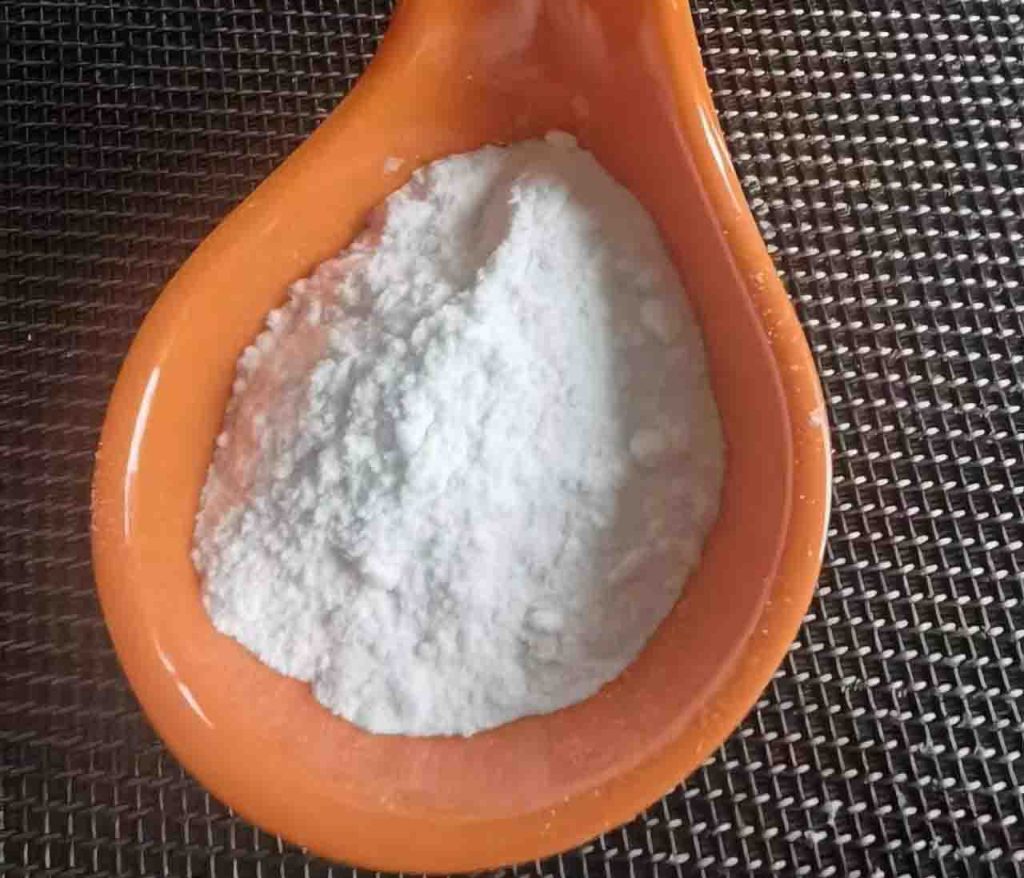
The highly purified and modified montmorillonite clay has a yellow, white or grayish white appearance, which is non-toxic and tasteless. The texture is very soft powder, and the main component is high-purity modified montmorillonite of hydrogen water.
Waterborne organic bentonite has excellent swelling properties. Colloidal dispersion, suspension, thickening, and thixotropy are excellent anti settling agents, latex stabilizers, and rheological additives for water-based systems.
They also have particularly excellent adsorption capacity, ion exchange ability, and connected properties. In some application fields, they have gradually become excellent new substitute materials for additives.
Adding 1 water-based bentonite is used as an additive in water-based coatings. When used, it is mainly used in real stone paint and thick paste coatings. It is widely used in some latex paints, textured coatings, colorful coatings, and industrial paints.
Water based bentonite can also be applied to dry powder additives, such as in mortar or putty, as well as in lightweight plastering gypsum.
When used as an additive in daily chemical products, water-based Rheology Modifiers can be applied in toothpaste volcanic mud film.
We also apply water-based Rheology Modifiers to pesticide fertilizers, which has a high demand.
Our water-based bentonite is used as a high-quality thickener in real stone paint and some thick paste coatings. It can provide strong thickening and promoting effects in water. As a white and flowable powder, it has a moisture content of 10%, with a pH value of about 8-10, and a pass rate of 99% on 200 acres. Our viscosity is approximately between 10000 and 13000.
The advantages of water-based bentonite organoclay are manifested in the following aspects.
In the early stage, the water-based system of organic bentonite had water resistance due to various types of cellulose.
The water retention and funeral performance are particularly outstanding. Compared with similar educational products, it can significantly improve the construction performance of real stone paint.
When Rheology Modifiers at 37, it can significantly improve the smoothness of construction and reduce flying sand and falling sand.
It is very easy to dissolve in water and does not clump together.
The viscosity of water-based bentonite is very stable and not easily degraded.
Waterborne organic bentonite is very helpful for the Sagging and use of thick slurry coatings, and can prevent oil tanks.That is to say, its anti sagging performance is particularly good.
We recommend obtaining results through extensive testing for the usual usage of water-based Rheology Modifiers, with a recommended addition amount between 0.1% and 0.5%.
The packaging for water-based spray coating is kraft paper bags, which are double layered with polyethylene film bags. The weight is usually 25 kilograms.
According to the requirements, we will also provide corresponding packaging according to customer needs. We suggest that you store it in an environment between 0-30 ℃, with a shelf life of 24 months. A dry and cool storage environment is a necessary storage environment requirement for water-based organic bentonite.
Regarding the usage method of water-based Rheology Modifiers, the surface has undergone a special process treatment, which is very easy to disperse in water and does not cause clumping.
When using, please slowly add organic bentonite to the water, stir slowly, and complete dispersion can be achieved in about 5 minutes. After complete dispersion, add pH regulator, which is easy to quickly thicken.
Add 10 products one by one, If other additives are present in the submerged water, it may also affect the speed and effectiveness of the fan. You can also achieve 2-3% operational delivery in advance, which will enhance the effectiveness of use.
In summary, different models of water-based Rheology Modifiers can be used in various environments, such as as as a single or mortar product for boundary removal and filling. When using, you can also take an appropriate amount of it and mix it evenly with other ingredients during cooking.
Here we provide a method of use, which is called domain gel method. It is recommended to configure gel with a concentration of 10~15%.
Please take an appropriate amount of water-based bentonite first, and slowly add water-based Rheology Modifiers to warm water under the condition of low-speed mixing. We recommend that the temperature of this warm water be between 25 ℃ and 35 ℃, so as to avoid caking.
After the hardness increases, adjust the speed to 1500~2000 rpm, The best time is between 15 and 30 minutes. The product is fully hydrated and dispersed to form a uniform gel, and then it is left for 8~24 hours before use.
It is very critical, that is, grinding dispersion or high-speed shearing, 14 degree grinding, mixing to qualified before directly adding to lotion.
The above pre gel teaching methods are believed to be of specific help to you, especially for those with scattered and special requirements during your use.
We will give additional details on the use of water-based spraying in cosmetics, such as facial mask, volcanic mud and other fields, as well as in water-based Rheology Modifiers systems with high purity requirements.
This is the most caring soil, touch screen and thickener, which can deceive oneself, as well as anti settling agents, antioxidant suspensions, and fillers. I hope it will be helpful for your body.
Please contact us by phone if you want to purchase the latest products. Product types: rheology modifier types: inorganic, organic, and associative, types of rheology modifiers for solvent and waterborne systems, rheological additives for industrial coatings and drilling, rheology modifier uses in paint, ink, grease, and drilling. Specific products: powder rheology modifier for solvent-borne coatings, inorganic rheology modifiers vs organic clay, organoclay as rheological additive for non-aqueous systems, clay rheology modifiers for paints, organoclay thixotropic properties. Applications: rheological additives for lubricant grease NLGI classification, rheology modifiers for adhesives and structural sealants. To source: organoclay supplier for rheology modifier procurement.
Frequently Asked Questions About Rheology Modifiers
What is the difference between a rheology modifier and a thickener?
The two terms overlap but are not identical. A thickener increases viscosity — its primary function is raising resistance to flow across the full shear rate range. A rheology modifier is a broader category that includes thickeners but also covers additives that impart yield stress, control thixotropy, or modify viscoelastic recovery without necessarily raising overall viscosity at all measurement conditions.
In practice, many additives marketed as thickeners modify the full rheological profile simultaneously. A single organoclay addition raises low-shear viscosity (thickening), creates yield stress (resistance to flow initiation), and produces thixotropic behavior (shear-reversible viscosity change). For solvent-based formulation purposes, identifying which combination of anti-settling, anti-sag, and application viscosity performance is required — rather than debating terminology — produces better additive selection outcomes.
→ Organoclay rheological additives for solvent-based systems · request technical guidance
How do organoclay and fumed silica compare as rheology modifiers for solvent-based paint?
Organoclay builds its gel network through edge-to-face interactions between flat, high-aspect-ratio clay platelets — generating strong yield stress, high thixotropic index, and effective simultaneous anti-settling and anti-sag performance at 0.3–2.0 wt%. It requires polar activator for conventional grades and high-shear mixing.
Fumed silica develops gel structure through hydrogen bonding between silanol surface groups — providing reasonable thixotropy and sag resistance but typically delivering lower yield stress at equivalent dosage. No polar activator is needed. In transparent or clear coating systems, fumed silica’s lower optical disruption may be preferred.
In dense, pigmented, or filled industrial coatings, organoclay is typically the first choice. In clear lacquers where optical clarity is a constraint and moderate thixotropy suffices, fumed silica may be preferred or both may be combined.
→ Organoclay for paint and coatings · request formulation samples and TDS
What is yield stress in rheology and why do coating formulators need to target it?
Yield stress is the minimum force per unit area that must be applied to a material before continuous flow initiates. Below this threshold, the material stores energy elastically; once applied stress exceeds the yield point, the material transitions to viscous flow.
In coating formulation, yield stress determines whether a wet film on a vertical surface will remain stationary against gravity. A coating with yield stress greater than the gravitational stress imposed by its applied film weight will not flow. This is mechanically distinct from simply increasing viscosity: viscosity slows flow but does not prevent it under constant applied stress. Yield stress prevents flow initiation entirely below the critical threshold. Organoclay contributes yield stress through its platelet gel network — the interactions between clay platelet edges and faces create a force barrier that must be overcome before any flow begins.
→ Anti-sag organoclay for coatings · organoclay yield stress in grease thickening
Why are solvent-based and water-based rheology modifiers not interchangeable?
Organoclay builds its gel network by absorbing and swelling in organic solvents — in water, the organoclay surface is hydrophobic and inert: no swelling occurs, no gel network develops, and the clay settles as inactive powder. Water-based rheology modifiers (HEC, HEUR, HASE polymers) function through hydration and hydrogen bonding in water-continuous media — they do not activate in organic solvent.
The water/solvent classification of the formulation base must be established before any rheology modifier selection begins. Misidentifying the formulation base is one of the most common sources of failed rheology modifier trials.
→ Organoclay for non-aqueous systems · confirm the correct rheology modifier family for your formulation
How does temperature affect rheology modifier performance in coatings and industrial applications?
Temperature affects rheology modifier performance through two parallel mechanisms: direct effects on the gel network structure, and indirect effects through changes in base medium viscosity.
Direct effects: Organoclay platelet networks weaken at elevated temperatures — higher thermal energy disrupts platelet interactions, reducing yield stress and thixotropic index. This is reversible for moderate temperature ranges, but sustained HPHT service requires grades engineered for thermal stability.
Indirect effects: Base fluids become less viscous at higher temperatures. Since thixotropic index is measured as a viscosity ratio, a drop in base fluid viscosity at elevated service temperature can reduce apparent TI even if the gel network remains intact. Test at actual service temperature — not only at laboratory 25°C — to confirm performance in elevated-temperature applications.
→ Organoclay for high-temperature drilling fluids · organoclay for elevated-temperature lubricating grease